

It costs an average of $2.35 for a human to answer a single support call, but that’s only the tip of the iceberg when you’re scaling a major brand.
You already have a team on the phones, but you know the math doesn't work as you grow.
You are caught between the massive cost of 24/7 staffing and the risk of losing frustrated customers who hate waiting on hold.
But there is a fix.
This guide will show you how to use AI voice agents for eCommerce in 2026.
First, we will define what these agents do for online stores.
Then, we will compare the top platforms to help you choose the right one for your team.
Editor’s note: Want to hear some sample support calls made for your Shopify store?
- Just paste your store URL
- Get sample calls in under 20 seconds (no email required)
- Listen to demo calls for my store
What is an ai voice agent for ecommerce?
At its core, an AI voice agent is a smart program that handles customer phone calls all by itself.
Using artificial intelligence, it can understand what someone is saying in their normal voice, figure out what they need, and talk back just like a person would.
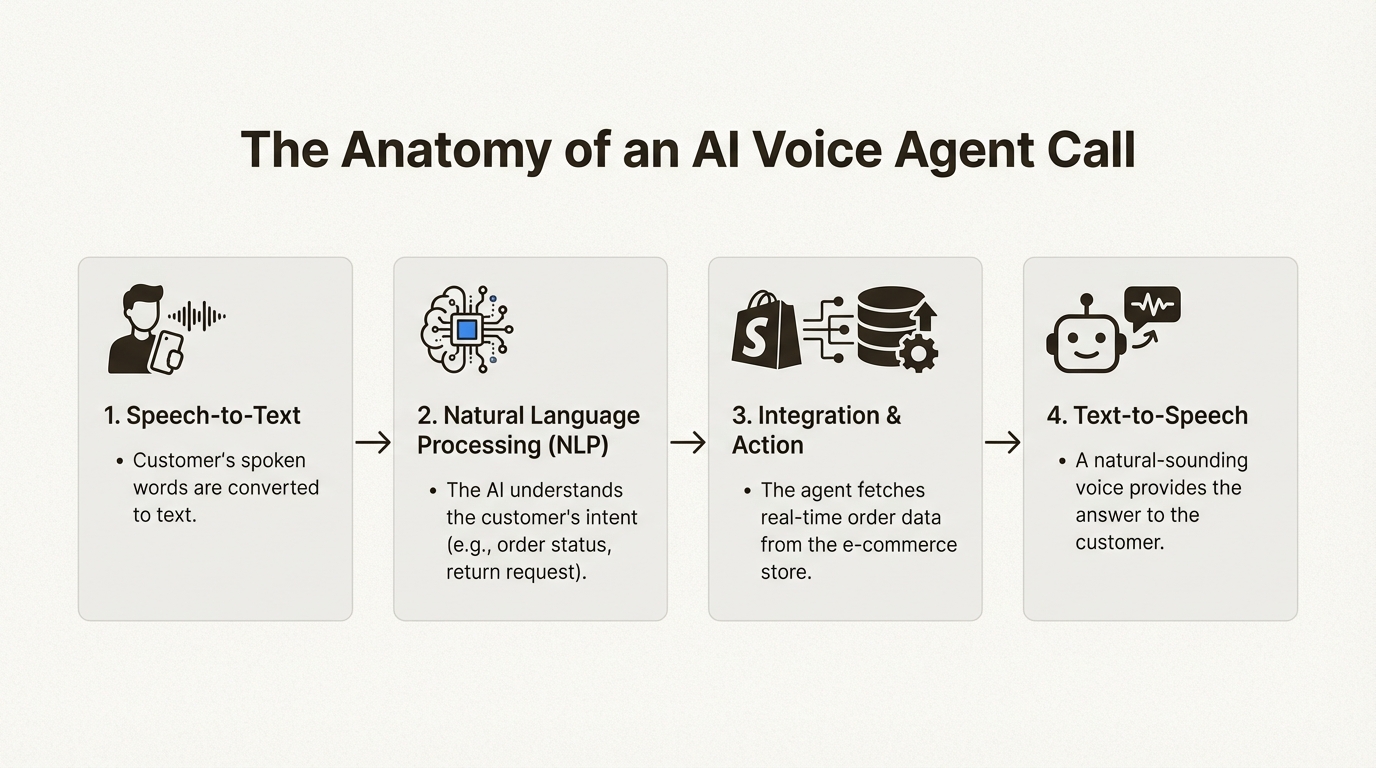
Here’s a simple breakdown of how it works.
When a customer calls, the agent uses:
1.
Speech-to-Text to turn their spoken words into text.
2.
Natural Language Processing (NLP) to analyze that text and understand what the caller actually wants, like finding an order or asking about a return.
3.
Integration & Action to connect to your store’s backend (like Shopify) to get information or kick off a process, like starting a return.
4.
Text-to-Speech to create a natural, spoken response to answer the customer's question.
This is a significant advancement from traditional "press 1 for sales, press 2 for support" systems.
AI agents are fully conversational. There are no rigid menus, and they can adapt to what your customer is saying on the fly.
The "for ecommerce" specialization is important. A generic voice bot may not have the built-in capabilities to handle specific tasks like order tracking, returns, and product questions. An ai voice agent for ecommerce is designed for these functions.
For example, platforms like Ringly.io are built with a native understanding of Shopify store data, allowing their agent, the AI, to handle e-commerce specific queries from the start.
Key features to look for in an ai voice agent for ecommerce
Not all AI voice agents are created equal, especially when it comes to the unique grind of running an online store. Here are the features that separate a basic tool from something that will actually help your support team.
Deep e-commerce platform integration
An AI agent's effectiveness is limited if it cannot access your store's data in real time.
Without a direct line into your backend, it functions more like a smart answering machine that cannot perform actions for your customers.
This is why a native Shopify integration is so important. It lets the agent instantly see live order statuses, look up customer history, and pull info from your product catalog without you having to do any complicated setup. This is a feature found in specialized tools like Ringly.io.
Its AI rep, the AI, is designed from the ground up with a native Shopify connection, letting it handle specific queries accurately from the moment you turn it on.
High automation and resolution rates
The goal isn't just to answer calls; it's to resolve them without needing to pass them off to a human.
The best agents should be able to handle the majority of common questions from start to finish.
Look for a platform that can fully automate key workflows like "Where Is My Order?" (WISMO) requests, initiating returns and exchanges, and answering frequently asked questions from your knowledge base.
You should also look for platforms that are transparent about their performance.
For example, Ringly.io reports that its AI agent, the AI, resolves around 73% of calls across over Shopify stores without human intervention, which demonstrates a measurable impact on a team's workload.
Speed and conversational quality
A voice assistant with high latency can create a frustrating and clunky user experience.
Low latency is key, as is the AI's ability to handle interruptions and conversational turns just like a real person.
The quality of the voice matters, too. A flat, robotic voice can annoy customers, but a natural-sounding one helps build trust and keeps the conversation smooth.
Platforms like Ringly.io are built for fast, low-latency responses, ensuring conversations feel fluid and natural.
Ease of setup and management
E-commerce teams operate with tight schedules. You don’t have time to hire a developer just to get a new support tool up and running.
A no-code, plug-and-play setup is essential for getting a quick return on your investment.
Some platforms may require custom development or technical expertise, which can add to implementation time and cost.
A no-code setup offers an alternative for teams looking for rapid deployment. Solutions that work out of the box, such as Ringly.io, are designed for this purpose.
You can literally get it set up in just a few minutes and start seeing the benefits almost immediately.
Analytics and insights
An effective AI voice agent can also be a valuable source of data. The best platforms provide insights that help you run your business better.
Look for key analytics features like call transcripts, sentiment analysis, and reports that show you what your customers are calling about most often.
This data is incredibly valuable. It can help you spot product issues, figure out what to add to your FAQ, and train your human agents on the topics that really matter.
Exploring top ai voice agent platforms for ecommerce in 2026
The market has a few different options, but each is built with a different goal in mind.
The key is to find a platform that fits the specific needs of an online store.
Gorgias: The all-in-one helpdesk approach
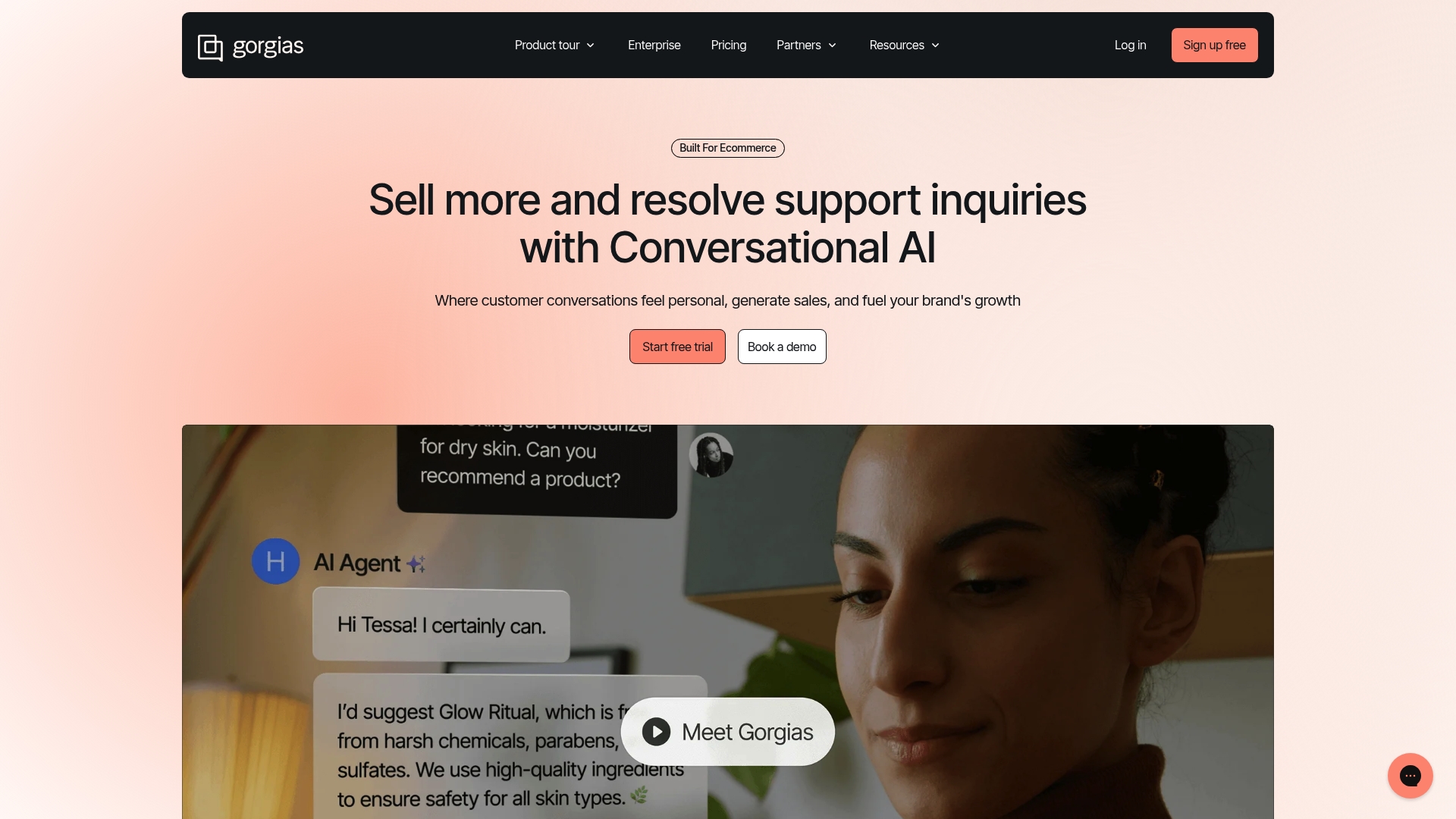
Gorgias is a well-known name in e-commerce support, offering an all-in-one helpdesk that pulls together conversations from email, chat, social media, and voice into a single dashboard.
Its AI Agent can reportedly resolve up to 60% of inquiries and even acts as a "Shopping Assistant" to help drive sales.
It has a deep Shopify integration that allows for order editing and data access. Pricing is based on tickets, with plans like "Pro" starting around $300/month for 2,000 tickets.
Voice and SMS are paid add-ons on top of that.
Gorgias is a comprehensive helpdesk platform. For businesses focusing specifically on automating phone support, Gorgias offers a broader suite of tools than may be required.
While its strengths include text-based channels, businesses looking for a dedicated voice solution might explore specialized tools.
Aircall: A cloud-based phone system

Aircall provides a cloud-based phone system with an AI Voice Agent designed to handle inbound calls for various businesses, not just e-commerce.
The agent is good at identifying tone and intent, can log calls into a CRM, and can be set up quickly within existing call flows.
Their pricing is a pay-as-you-go model that starts at $0.99 per minute for the first 500 minutes, with the price dropping as your volume increases.
Aircall's agent is designed for general business tasks, such as qualifying leads or setting appointments.
Handling e-commerce specific functions like returns may require additional configuration. The per-minute pricing model should be evaluated based on a store's expected call volume.
Consio.ai: A sales-focused platform
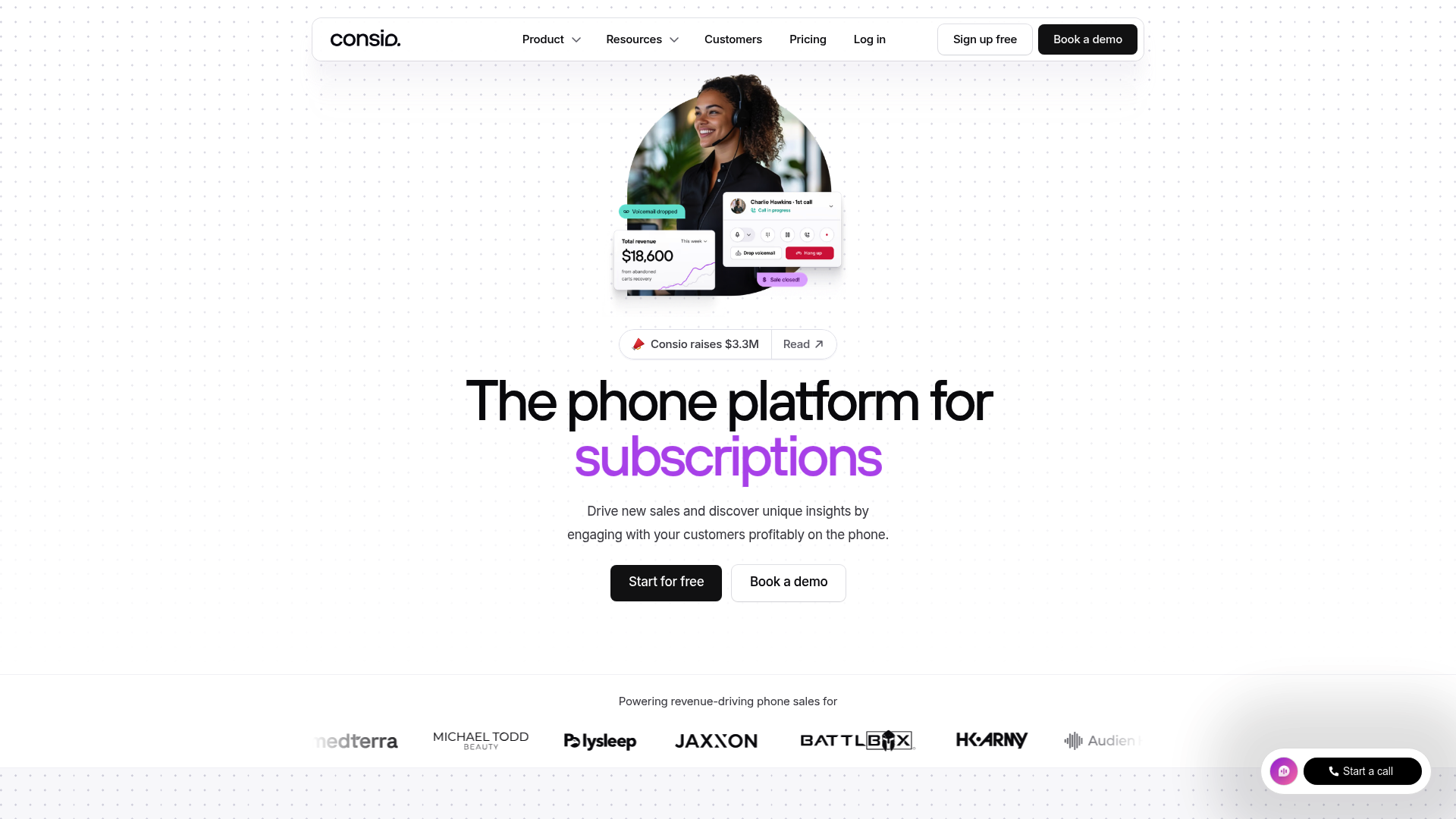
Consio.ai is a voice platform for Shopify that does two things: it offers an AI Voice Agent for inbound calls and an "Ecom Power Dialer" for outbound sales campaigns.
Its AI agent can answer FAQs and escalate calls from high-value buyers to a human. The platform also gives you AI summaries and transcripts for all your calls.
Pricing is usage-based and starts at $60/month for up to 400 minutes of call time.
The focus here is on turning phone calls into a sales channel by calling customers about things like abandoned checkouts. While it does have an inbound AI agent, its attention is split between sales and support.
Businesses prioritizing inbound customer service automation might find that a platform dedicated to that function offers a more extensive feature set for their needs.
ElevenLabs: The developer-first toolkit

ElevenLabs is a powerful Conversational AI platform, known for its realistic, low-latency voices.
It provides APIs and tools for developers to build their own voice agents from scratch.
It’s known for high-quality voices and support for over 70 languages, and it’s super flexible if you know what you’re doing.
Pricing is credit-based, but for business use, it generally works out to be between $0.12 to $0.30 per minute.
The main thing to understand is that ElevenLabs is a toolkit for developers.
Building an effective e-commerce voice agent with it requires technical skill, time, and ongoing maintenance. This presents a classic 'build vs. buy' decision. A pre-built solution is the 'buy' option for merchants who prefer a ready-to-use platform.
| Feature | Gorgias | Aircall | Consio.ai | ElevenLabs | Ringly.io |
|---|---|---|---|---|---|
| Primary Focus | All-in-One Helpdesk | General Call Center | Inbound/Outbound Sales | Developer Platform | Ecommerce Phone Support |
| Shopify Integration | Deep | Via CRM | Native | Custom API | Deeply Native |
| Setup Effort | Medium | Low | Low-Medium | Very High (Requires Coding) | Very Low (Under 5 mins) |
| Pricing Model | Ticket-Based Subscription | Per-Minute | Usage-Based Subscription | Credit-Based Subscription | Tiered Monthly Plan (with Guarantee) |
The business impact of a dedicated ai voice agent for ecommerce
So, we've talked features and platforms. What does a dedicated voice agent actually do for your business? Let's get into the real-world results.
Reducing support costs
A human agent works about 40 hours a week, but an AI agent is on the clock for all 168 hours.
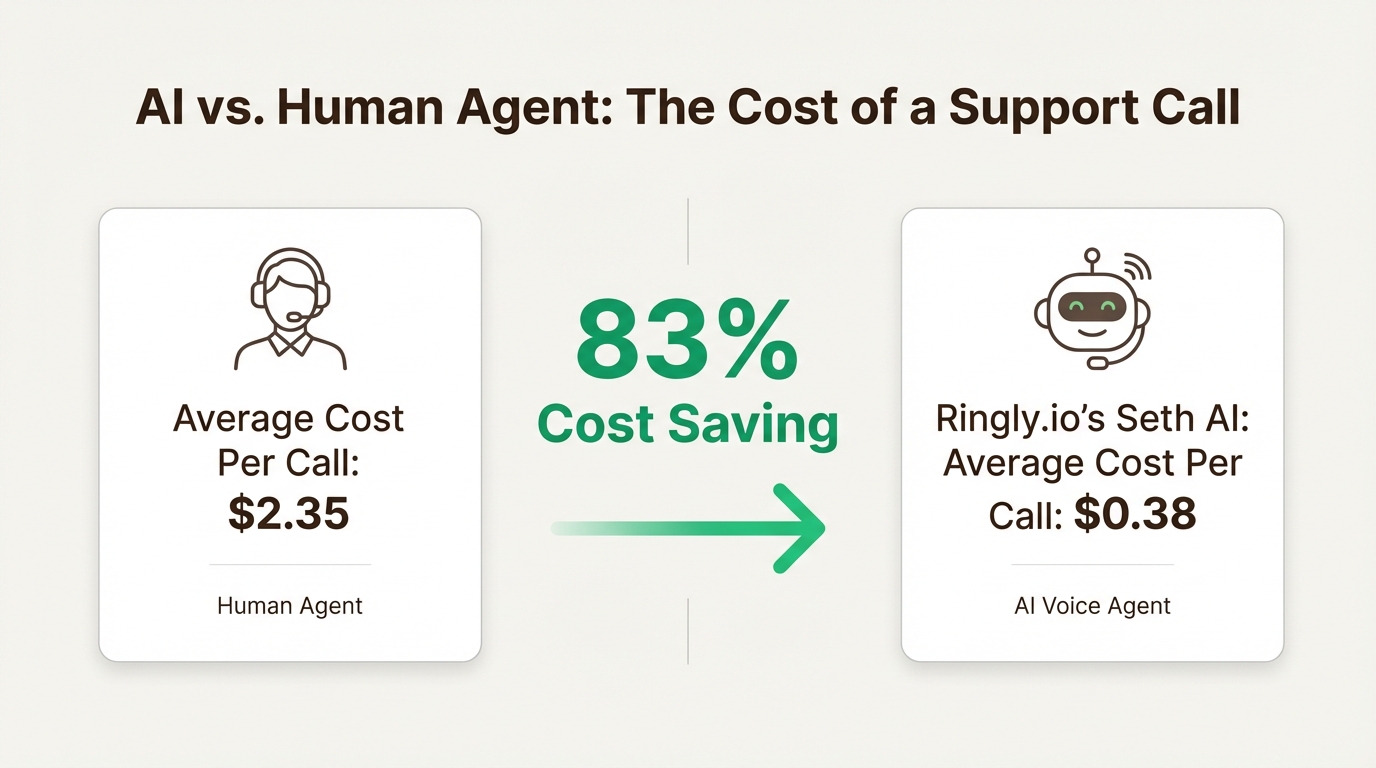
At Ringly.io, they’ve calculated that the average cost per call handled by their agent, the AI, is about $0.38. Compare that to the industry average of around $2.35 for a human agent, representing a potential 83% saving per call.
By automating over 70% of your routine calls, you can handle a much higher volume without needing to hire more people.
That has a direct and immediate impact on your bottom line.
Providing 24/7 support
24/7 availability is a significant advantage. Customers can get instant help on weekends, late at night, and on holidays.
This can help build loyalty and potentially reduce cart abandonment because people can get their questions answered before they click away.
Then there's the power of multilingual support. An AI agent can speak dozens of languages fluently, letting you serve a global customer base without having to hire a team of translators.
For example, the AI supports over 30 languages, which can facilitate expansion into new markets.
Unlocking valuable customer insights
Phone calls contain valuable, unfiltered customer feedback, which can be challenging to analyze manually. An AI agent, on the other hand, captures and transcribes every single conversation.
You can then analyze all that data to:
- Spot recurring product issues or shipping problems before they blow up.
- Find gaps in your online FAQ or knowledge base that are causing confusion.
- Understand customer sentiment at scale to make smarter decisions about your business.
Choosing the right AI voice agent
An ai voice agent for ecommerce isn't some far-off, futuristic idea anymore. It's a practical and powerful tool that can help you grow your business right now. It takes the repetitive, time-consuming tasks off your team's plate, freeing them up to focus on the work that truly matters.
Ultimately, the right agent doesn't just save you money. It elevates your customer experience and delivers priceless insights. The key is to choose a solution built for the specific demands of e-commerce, one that integrates easily and can deliver results quickly.
Ready to try an ai voice agent for your store?
Stop letting repetitive calls drain your team's time and resources.
With Ringly.io, you can set up the AI, your AI phone support rep, in just a few minutes and start resolving customer queries 24/7.
And you pay nothing until the AI resolves at least 65% of your calls.
Frequently Asked Questions
How quickly can I set up an ai voice agent for ecommerce?
With a platform built for ecommerce, like Ringly.io, you can be up and running in just a few minutes. It's a no-code setup that connects directly to your Shopify store, so you can start automating calls almost immediately.
Will an ai voice agent for ecommerce sound robotic to my customers?
Modern AI voices are designed to be natural and have low latency, which means conversations flow smoothly without awkward pauses. The goal is to make the experience feel like talking to a helpful human.
What kind of tasks can an ai voice agent for ecommerce actually handle?
It can handle most of the common, repetitive questions your support team gets. This includes tracking orders ("Where is my order?"), starting returns or exchanges, and answering frequently asked questions about your products or policies.
Is an ai voice agent for ecommerce expensive compared to a human agent?
It's significantly more cost-effective. For example, a call handled by Ringly.io's AI agent costs about $0.38, while the industry average for a human agent is around $2.35. That's a potential 83% saving on every call it resolves.
What happens if an ai voice agent for ecommerce can't answer a customer's question?
Effective agents are trained to recognize their limitations. If a customer has a complex issue or gets frustrated, the agent will seamlessly escalate the call to a human team member. This ensures your customers always get the help they need.
How does an ai voice agent for ecommerce integrate with my Shopify store?
The best platforms offer a deep, native integration. This means the AI can access your store's live data to see order statuses, customer history, and product details in real-time, allowing it to give accurate and helpful answers.