
Social commerce isn't a side channel anymore. It's a $2.11 trillion market in 2026, and it's growing faster than almost any other segment in ecommerce. If you sell online and you're not paying attention to what's happening on TikTok, Instagram, and live shopping, you're leaving real money on the table.
We pulled together 47 social commerce statistics from recent reports by eMarketer, Mordor Intelligence, Grand View Research, and others. Here's what the data actually says.
Hear what AI support calls sound like for your store. Just paste your Shopify URL and get sample calls in under 20 seconds, no email required. Listen to demo calls for my store.
Key highlights
- The global social commerce market is worth $2.11 trillion in 2026, growing at a 29.12% CAGR (Mordor Intelligence)
- US social commerce sales cross $100 billion for the first time (eMarketer)
- TikTok Shop is projected to hit $23.4 billion in US ecommerce sales, bigger than Target or Costco online (eMarketer)
- Live shopping converts at up to 30%, compared to 2-3% for traditional ecommerce (GetStream)
- 82% of consumers use social media for product discovery and research (SellersCommerce)
- 67% of US consumers buy through social media at least once a month (Portada)
Market size and growth
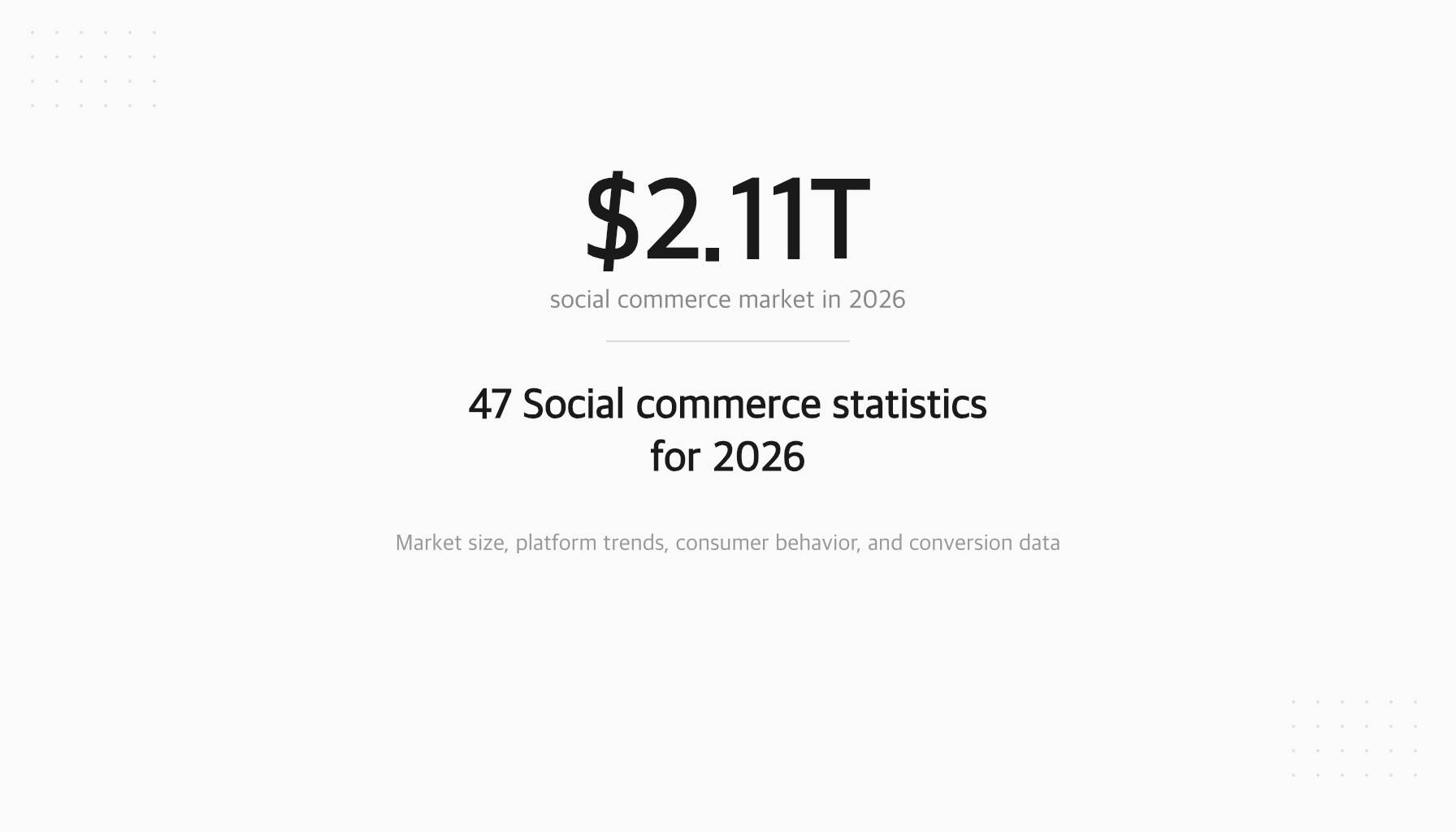
The global social commerce market is worth $2.11 trillion in 2026. That's up from $1.63 trillion in 2025, and it's projected to reach $7.55 trillion by 2031 at a CAGR of 29.12%. (Mordor Intelligence)
US social commerce sales will surpass $100 billion in 2026. That's $100.99 billion to be exact, an 18% year-over-year increase. Social commerce is no longer a small slice of the ecommerce pie. (eMarketer)
Social commerce accounted for 8.8% of total US ecommerce sales in 2025. That share is climbing every year as more platforms add native checkout and shopping features. (SellersCommerce)
The global market could reach $8.5 trillion by 2030. Grand View Research projects a CAGR of 26.2% over that period, driven by mobile shopping and platform investments. (Grand View Research)
The US social commerce market was $114.7 billion in 2025. It's projected to grow to $188.3 billion by 2030 at a 10.4% CAGR. (Grand View Research)
China accounts for 50% of the global social commerce market. Chinese brands achieve a 30% conversion rate on social platforms, far above the global average. (Grand View Research, Amra & Elma)
Social commerce in China is expected to represent 17.1% of total online retail sales. For comparison, social commerce is still under 9% of US ecommerce. China is years ahead on adoption. (Statista)
The growth numbers here aren't subtle. When a market doubles in five years and triples in a decade, it changes how every ecommerce brand needs to think about their sales channels.
Consumer behavior and shopping habits
82% of consumers use social media for product discovery. Before they Google a product, they're scrolling feeds and watching reviews. Social is the new search. (SellersCommerce)
67% of US consumers make at least one purchase through social media each month. And 22% have bought more than 10 items in the past year via social platforms. (Portada)
81% of consumers say social media compels them to make impulse purchases. 28% say they make impulse buys at least once a month. That's the power of discovery-driven commerce. (inBeat Agency)
There are 114.3 million social media buyers in the US. That's 33% of the country's population already buying through social platforms. (SellersCommerce)
More than 60% of product discovery now happens on TikTok, Instagram, and YouTube. Social platforms have replaced traditional search for many buyers, especially younger ones. (Sprout Social)
Customer reviews influence 62% of shoppers. Reviews are the single biggest factor behind social media-driven purchases, followed by offers and discounts at 61%. (SellersCommerce)
The takeaway is clear. Your customers are already browsing, researching, and buying on social media. If your customer service and support isn't set up to handle the orders coming from these channels, you're going to fall behind fast.
TikTok Shop statistics
TikTok Shop is projected to hit $23.41 billion in US ecommerce sales in 2026. That's a 48% increase year-over-year. To put it in perspective, that's a larger US ecommerce business than Target, Costco, Best Buy, or Kroger. (eMarketer)
80.4 million US users are expected to shop on TikTok in 2026. That's about 67% of TikTok's total US audience. The conversion from viewer to buyer is accelerating. (eMarketer)
TikTok Shop generated $15.82 billion in US sales in 2025. That was 108% year-over-year growth from 2024. The platform went from experiment to major sales channel in two years. (eMarketer)
There are 475,000 TikTok shops in the US as of 2026. About 216,000 of those are actively selling products. Globally, 15 million sellers are active on TikTok Shop across 750+ categories. (Red Stag Fulfillment, Resourcera)
TikTok's average conversion rate is 3.4%. That's higher than Instagram (1.08%) and YouTube (1.4%), making TikTok one of the most effective social commerce platforms for actually closing sales. (Amra & Elma)
TikTok Shop's growth is the biggest story in social commerce right now. Brands selling health and beauty, supplements, and apparel (the same industries where phone support matters most) are seeing massive traction. More sales mean more order tracking questions and more returns to handle.
If you're on Shopify and selling through TikTok Shop, Ringly.io can handle the support calls those orders generate. Try it free for 14 days.
Instagram and Facebook shopping
130 million Instagram users tap on shoppable posts every month. Instagram's native checkout and shopping tags make it one of the smoothest in-app buying experiences available. (Capital One Shopping)
Social commerce sales on Instagram totaled $42.8 billion in 2025. The platform generates significant revenue through both organic discovery and paid promotion. (Capital One Shopping)
81% of Instagram users research products and brands on the app. And 44% shop on Instagram in an average week. It's not just a browsing platform anymore. (Hootsuite, Cropink)
Instagram's checkout conversion rate is 2.7%, with a $65 average order value. Not the highest conversion rate, but the volume makes up for it. (Cropink)
250 million people engage with Facebook Shops every month. Facebook remains the leading social commerce platform in the US by user count, even if TikTok gets more headlines. (SellersCommerce)
70 million Americans are expected to shop on Facebook in 2025. The platform's massive user base and Marketplace integration keep it relevant for commerce. (SellersCommerce)
46.8 million people shop on Instagram in the US. That makes Instagram the second-largest social shopping platform in America after Facebook. (Capital One Shopping)
Meta's platforms still move a lot of volume. For Shopify store owners, Instagram and Facebook remain the two biggest social acquisition channels. The challenge is handling the customer support that comes with all those orders.
Pinterest and visual commerce
85% of weekly Pinners have purchased based on a brand's Pin. Pinterest users come to the platform with buying intent, which makes it different from most other social networks. (Thunderbit)
Pinterest shoppers spend 2x more per month than shoppers on other platforms. Higher average order values and stronger purchase intent make Pinterest uniquely valuable for ecommerce brands. (Thunderbit)
93% of Pinterest users use the platform to plan purchases. They're actively researching products, saving ideas, and comparing options. (Thunderbit)
Pinterest doesn't get the same attention as TikTok or Instagram in social commerce conversations, but the data tells a different story. High intent, high AOV, and strong conversion make it a platform worth taking seriously, especially for fashion, beauty, and home brands.
Live shopping and video commerce
Video commerce captured 43.22% of the social commerce market share in 2025. It's the dominant format now. Short-form video, shoppable livestreams, and product demos are driving more sales than static posts. (Mordor Intelligence)
Global livestream sales are projected to exceed $1 trillion by 2026. That's up from $682.5 billion in 2023. The growth is being driven by China, but the US is catching up. (GetStream)
The US livestream shopping market is forecast to reach $68 billion by 2026. That's a roughly 36% increase from 2025 levels, and it will account for more than 5% of total digital commerce sales. (Statista)
Shoppable live streams convert at up to 30%. Compare that to the 2-3% conversion rate for traditional ecommerce. The real-time, interactive format builds trust and urgency. (GetStream)
Live shopping could account for 10-20% of all ecommerce sales by 2026. That's a significant share for a format that barely existed in the US a few years ago. (G2)
Only 12% of US shoppers have bought through a livestream so far. Another 12% say they plan to try it. The format is still early in the US, which means there's room for massive growth. (Fit Small Business)
Social reselling is growing at a 34.26% CAGR. It's the fastest-growing segment within social commerce from 2026 to 2031. (Mordor Intelligence)
Live shopping is where social commerce and customer experience intersect most directly. When buyers can ask questions in real time during a stream, they expect that same level of responsiveness after they purchase. That's where having solid phone support matters.
Trust, reviews, and user-generated content
92% of people trust reviews and user posts more than advertisements. Social proof isn't optional in social commerce. It's the foundation of purchase decisions. (WiserReview)
95% of consumers consult customer reviews before buying. And 86% consider reviews essential to their purchase decision. If you're selling on social without reviews, you're fighting uphill. (WiserReview)
Visitors who interact with user-generated content convert 102.4% higher than average. UGC doesn't just build trust. It directly drives sales. (Taggbox)
UGC-based ads generate 4x higher click-through rates than standard ads. Real customer content outperforms polished brand creative across every platform. (Taggbox)
64% of Gen Z left an ecommerce store without purchasing because it lacked customer photos or reviews. For younger shoppers, no UGC means no sale. (Social Media Today)
User-generated videos generate 6x higher engagement than branded videos. Authenticity wins. Real customer content consistently outperforms polished studio production on social platforms. (Taggbox)
Trust is everything in social commerce. And it extends beyond the purchase. When something goes wrong with an order, customers expect fast, helpful support. Brands with responsive customer service build the kind of trust that drives repeat purchases and positive reviews.
Gen Z, millennials, and the creator economy
80% of Gen Z and millennials say social media drives their purchases. These two generations are the core engine of social commerce growth. (Bazaarvoice)
44% of Gen Z shoppers made a purchase on social media in the last month. More than half of Gen Z bought something on social platforms in 2024, leading all generations. (Bazaarvoice)
Millennials and adult Gen Z now command 32% of consumer spending. That's up 8 percentage points from 2020. Their economic influence is growing every year. (Numerator)
65% of consumers have purchased a creator-founded product or service. Among 16-24 year-olds, that number jumps to 91%. Creator commerce is mainstream now. (eMarketer)
58% of consumers over 18 have purchased a product because of an influencer endorsement. Creator recommendations now carry more weight than most traditional advertising. (eMarketer)
56% of Gen Z and millennials purchased based on a creator's recommendation. Health and beauty (53%) and apparel (41%) are the top categories where creators have the most influence. (Bazaarvoice)
These demographics are also the most comfortable buying on their phones. But they still call for support when something goes wrong with a high-value order. Having an AI voice agent that can pull up order details, process returns, and answer questions 24/7 is becoming a baseline expectation.
What this means for ecommerce brands
The data paints a clear picture. Social commerce isn't just growing. It's becoming a primary sales channel. When TikTok Shop alone does more US ecommerce volume than Target, and 67% of American consumers buy through social media monthly, you can't treat these platforms as nice-to-haves.
For Shopify store owners specifically, this means three things. First, your product discovery is happening on social, so your listing quality, UGC, and creator partnerships matter more than ever. Second, the orders coming through social channels carry the same (or higher) support expectations as your direct-to-consumer orders. Customers want fast answers about shipping, returns, and product questions regardless of where they bought.
Third, and this is where most brands fall behind, the volume of support requests scales with your social commerce sales. When you're getting orders from TikTok Shop, Instagram, Facebook, and your own store simultaneously, the phone starts ringing. A lot. According to the data, 90% of shoppers use customer service quality as a deciding factor for repeat purchases.
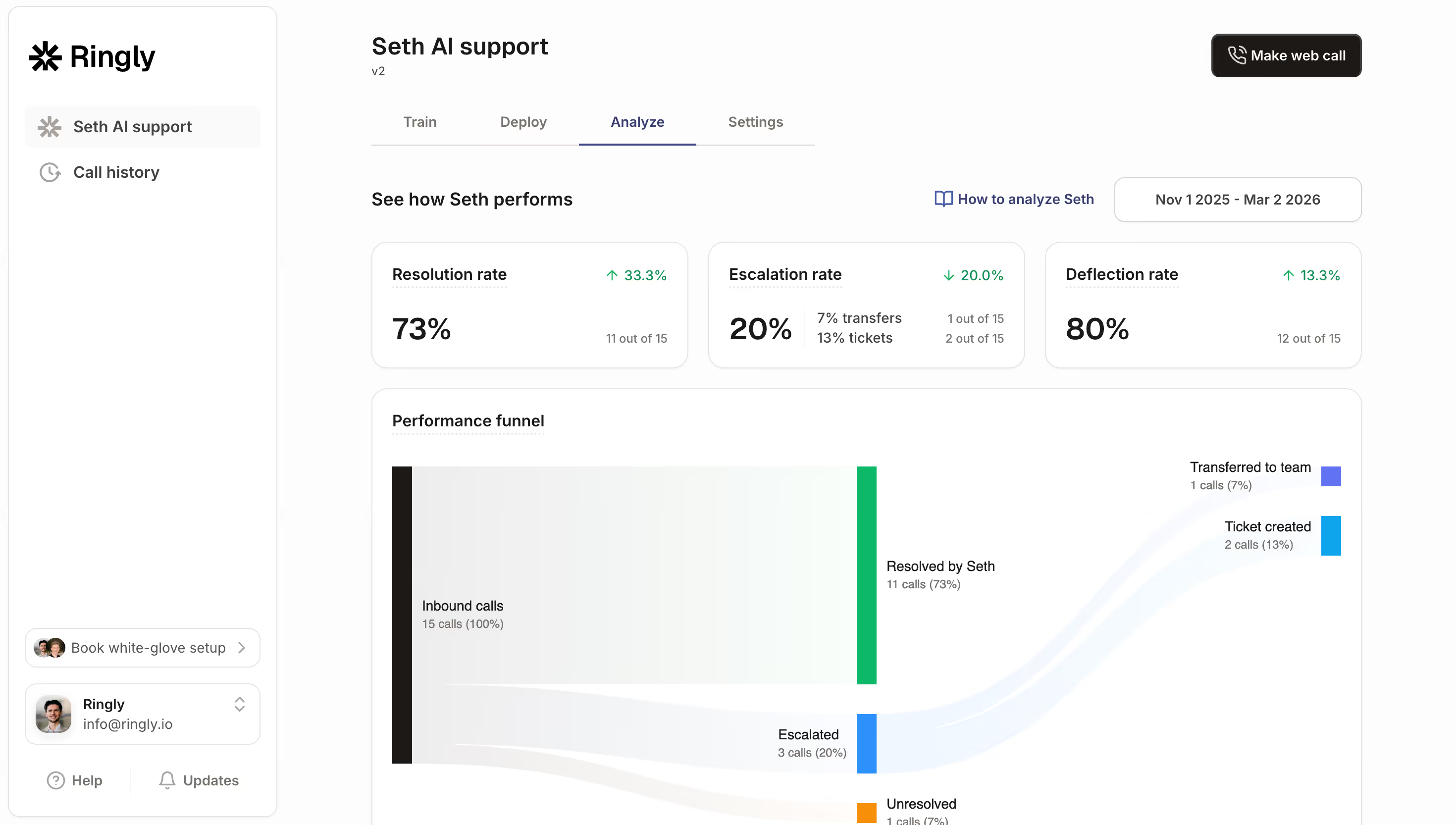
This is exactly the problem Ringly.io solves. Our AI phone agent handles 73% of support calls automatically. It looks up orders, answers product questions, processes returns, and works 24/7 in 40 languages. Setup takes three minutes.
If you run a Shopify store and social commerce is driving your growth, Ringly.io handles the support calls so you can focus on selling. Try free for 14 days.
Frequently asked questions
How big is the social commerce market in 2026?
The global social commerce market is worth approximately $2.11 trillion in 2026, according to Mordor Intelligence. In the US alone, sales are projected to surpass $100 billion for the first time. The market is growing at a CAGR of 29.12%.
Which social media platform has the most social commerce sales?
Facebook remains the largest social commerce platform by user count in the US, with 250 million monthly Facebook Shops users. But TikTok Shop is growing the fastest, with projected US sales of $23.4 billion in 2026, a 48% year-over-year increase.
What is the conversion rate for social commerce?
Conversion rates vary by platform. TikTok averages 3.4%, Instagram checkout is 2.7%, and YouTube sits around 1.4%. Live shopping events can convert at up to 30%, which is significantly higher than the 2-3% average for traditional ecommerce.
How does social commerce affect customer support?
More social commerce sales mean more support requests. Customers who buy through TikTok Shop or Instagram still need help with order tracking, returns, and product questions. Brands that sell across multiple social channels often see a spike in phone and chat support volume.
What percentage of Gen Z shops on social media?
44% of Gen Z shoppers made a purchase on social media in the last month, and more than half bought something on social platforms in 2024. Gen Z leads all generations in social commerce adoption.
Is live shopping really growing in the US?
Yes, but it's still early. Only 12% of US shoppers have bought through a livestream so far, with another 12% planning to try it. The US livestream shopping market is forecast to reach $68 billion by 2026. Conversion rates for live shopping events can hit 30%.
What role do reviews play in social commerce?
Reviews are the top factor in social commerce purchases. 95% of consumers read reviews before buying, and 92% trust user-generated content more than ads. Stores without customer photos and reviews risk losing 64% of Gen Z shoppers before they even add something to cart.
How can small ecommerce brands compete in social commerce?
Focus on one or two platforms where your audience is most active. Build a UGC strategy, partner with micro-creators, and make sure your post-purchase experience is solid. Customers who have a great support experience are more likely to leave positive reviews and buy again. Tools like Ringly.io can handle phone support at a fraction of the cost of a traditional call center.