
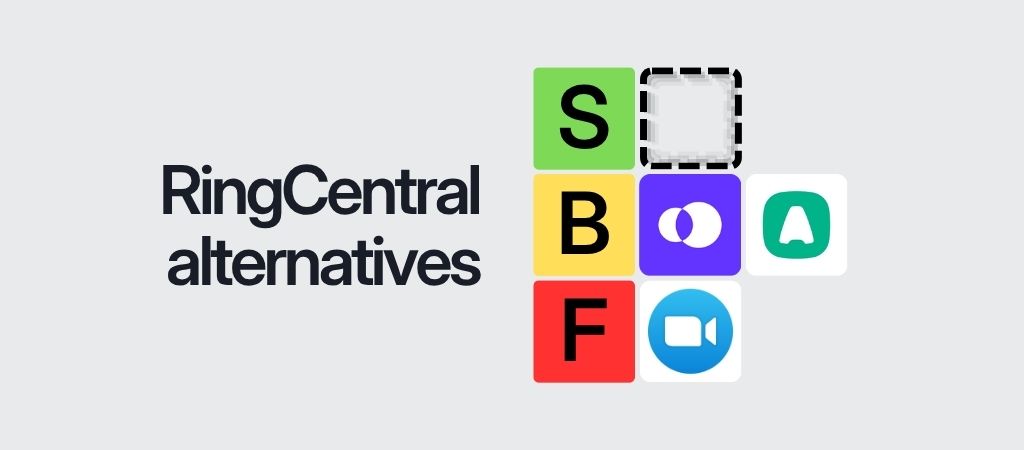
RingCentral has been a major player in business communications for over 20 years.
It offers voice, video, messaging, and contact center features in one platform. But many businesses find themselves searching for alternatives.
The most common complaints include pricing that climbs quickly with add-ons, a complex interface with a steep learning curve, and support that can feel geared toward enterprise customers.
Small businesses especially feel like they are paying for features they will never use.
This guide covers 7 RingCentral alternatives that solve these problems.
Each option is suited to different needs, from AI-powered calling to budget-friendly basics.
Editor’s note: Want to hear some sample AI support calls made for your Shopify store?
- Just paste your store URL
- Get sample calls in under 20 seconds (no email required)
- Listen to demo calls for my store
Comparison at a glance
| Provider | Starting Price | Best For | Standout Feature |
|---|---|---|---|
| Nextiva | $15/user/mo | Overall reliability | 99.999% uptime guarantee |
| Dialpad | $15/user/mo | AI-powered teams | Real-time transcription |
| Zoom Phone | $10/user/mo | Video-first teams | Zoom Workplace integration |
| 8x8 | $24/user/mo | Global businesses | Unlimited international calling |
| Vonage | $13.99/user/mo | API customization | Developer-friendly platform |
| Aircall | $30/user/mo | Sales and support teams | Power dialer and CRM sync |
| Quo (formerly OpenPhone) | $15/user/mo | Startups and small teams | Sona AI agent included |
The 7 best RingCentral alternatives
1. Nextiva

Nextiva positions itself as the reliable choice with 99.999% uptime and 24/7 support. It offers a unified platform for voice, video, and messaging with strong CRM integrations.
Key features:
- Unified customer experience platform
- Eight redundant data centers
- Salesforce, HubSpot, Microsoft Dynamics integrations
- 24/7 internal support (not outsourced)
Pricing:
| Plan | Annual Price | Key Features |
|---|---|---|
| Core | $15/user/month | Essential VoIP, inbound/outbound calling, business SMS, video meetings, team chat |
| Engage | $25/user/month | Adds customer-to-team SMS, toll-free number with minutes, advanced reporting, live/bot web chat |
| Power Suite CX | $75/user/month | Adds blended omnichannel engagement, real-time dashboards, AI transcription, intelligent routing |
Source: Nextiva pricing
Pros: Lower entry price than RingCentral, award-winning support, superior reliability Cons: Advanced analytics require higher tiers
Best for: Growing teams that want enterprise features without the enterprise price tag.
2. Dialpad

Dialpad leads with AI-powered features built into every call. Real-time transcription, sentiment analysis, and call coaching set it apart from traditional VoIP providers.
Key features:
- Real-time call transcription and AI summaries
- AI Live Coach for real-time guidance
- Keyword and phrase tracking
- Built-in analytics and heat maps
Pricing:
| Plan | Annual Price | Key Features |
|---|---|---|
| Standard | $15/user/month | Unlimited calls, AI meetings, messaging, real-time transcripts, call summaries, Google/Microsoft integrations |
| Pro | $25/user/month | Adds CRM integrations (Salesforce, Outreach), 24/7 support, multi-office management |
| Enterprise | Custom | Adds SSO, user access controls, unlimited locations |
Source: Dialpad pricing
Pros: Best-in-class AI features, modern cloud architecture, fully integrated contact center option Cons: Smaller integration ecosystem than RingCentral
Best for: Teams that want AI-driven insights and coaching on every call.
3. Zoom Phone

Zoom Phone extends the familiar Zoom experience into business calling. For teams already using Zoom for meetings, it offers a natural extension with one bill and one interface.
Key features:
- Integration with Zoom Workplace
- Video meetings and phone in one app
- Global coverage in 40+ countries
- Bring your own carrier option
Pricing:
Zoom Phone is available as an add-on to Zoom Workplace plans:
| Plan | Annual Price | Key Features |
|---|---|---|
| Basic | Free | 40 min meetings, 100 participants, VoIP calling |
| Pro | $13.33/user/month | 30-hour meetings, 100 participants, 10 GB cloud storage |
| Business | $18.33/user/month | 300 participants, SSO, unlimited whiteboards |
| Enterprise | Custom | 500+ participants, full-featured PBX, webinars |
Phone-specific add-ons: Metered $10/user/month, Unlimited Regional $15/user/month
Source: Zoom pricing
Pros: Lowest entry price, familiar interface, seamless video-to-phone switching Cons: Limited advanced call center features
Best for: Teams already invested in the Zoom ecosystem who want simplicity.
4. 8x8
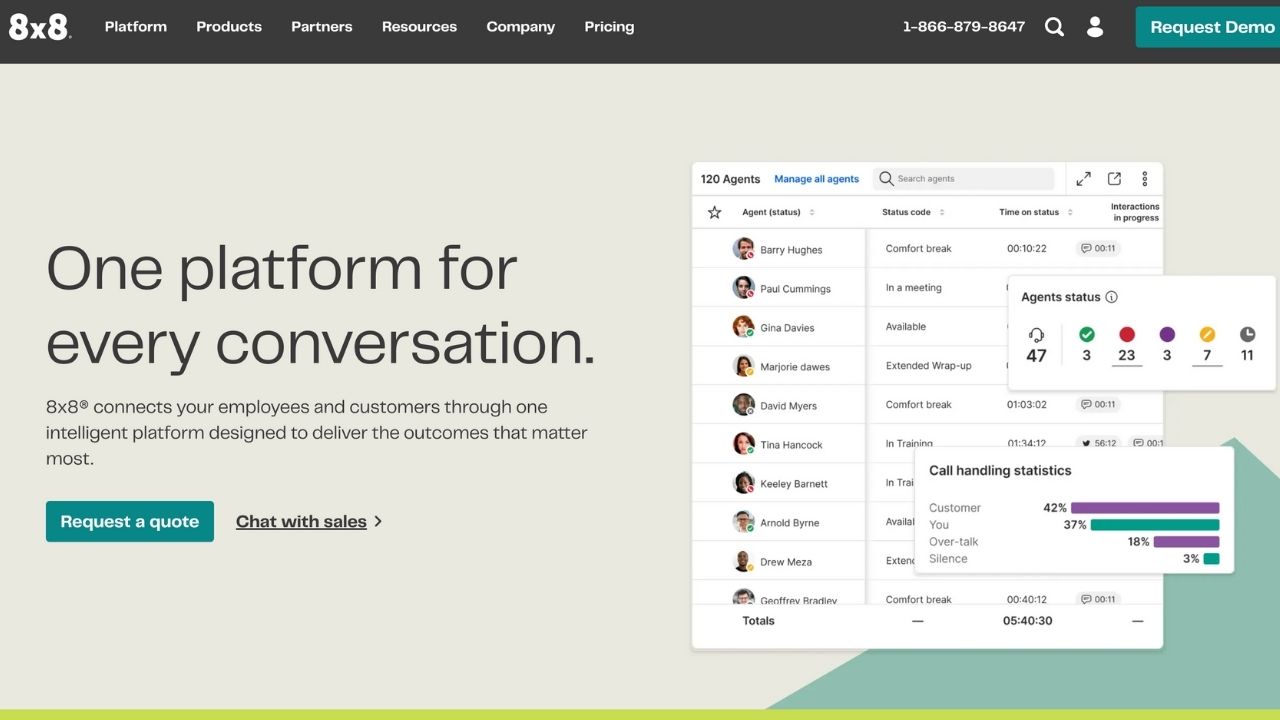
8x8 specializes in global communications with unlimited calling plans that cover multiple countries. It is a strong choice for businesses with international operations.
Key features:
- Unlimited international calling plans
- Integrated contact center
- Global PSTN coverage
- Advanced analytics and reporting
Pricing:
8x8 uses a mix-and-match pricing model. Specific plan pricing requires contact with sales. The platform offers:
- 8x8 Work - Unified communications (call, meet, message)
- 8x8 Contact Center - Omnichannel routing, agent workspace
- 8x8 Engage - CX beyond contact center
- 8x8 for Microsoft Teams - Teams integration
Source: 8x8 pricing
Pros: Excellent global coverage, unified communications and contact center, strong compliance features Cons: Higher starting price, complex pricing tiers
Best for: Global enterprises and businesses with international calling needs.
5. Vonage
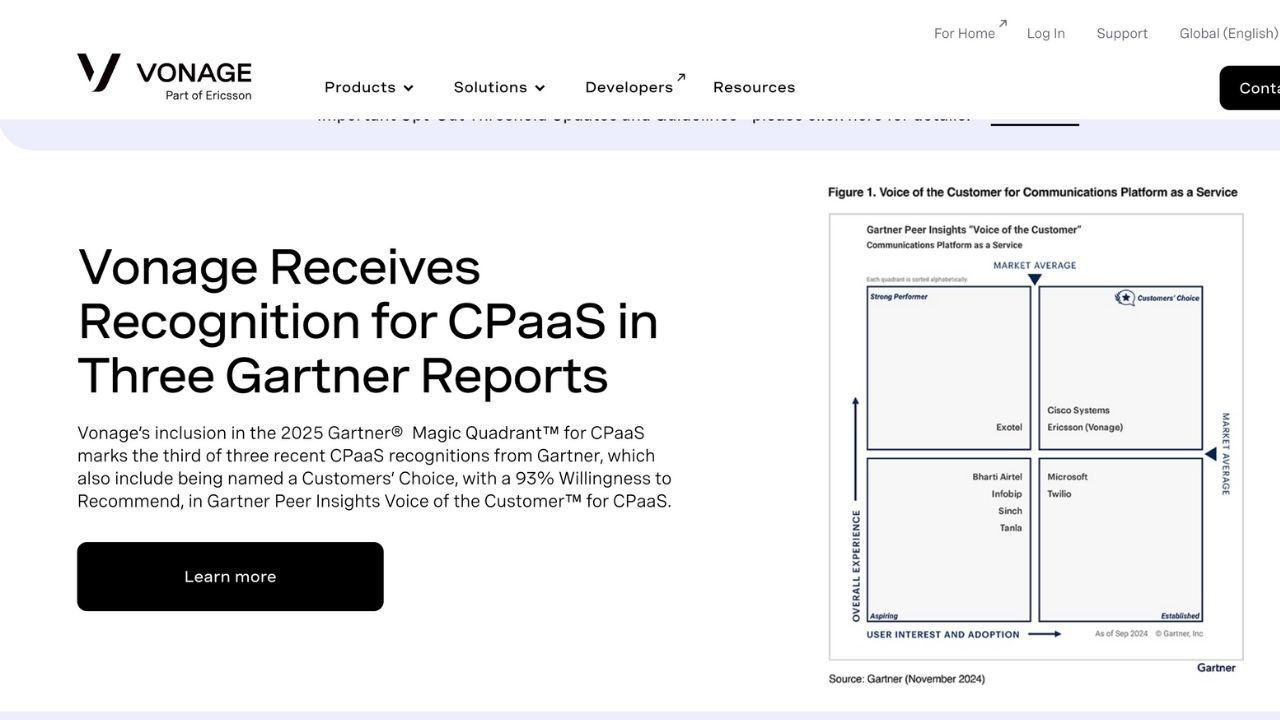
Vonage offers flexibility through its extensive API platform. Businesses that need custom integrations or programmable voice capabilities find it a strong fit.
Key features:
- Extensive API library
- VBC Admin Portal for management
- Wide app center with integrations
- Unlimited domestic calling
Pricing:
| Plan | Price | Key Features |
|---|---|---|
| Mobile | $13.99/user/month | Unlimited calls, SMS, team messaging |
| Premium | $20.99/user/month | Adds video meetings (200 participants), app center access |
| Advanced | $27.99/user/month | Adds call recording, visual voicemail, call groups |
Source: SERP research from official Vonage sources
Pros: Highly customizable, good call quality, strong developer tools Cons: Some features require higher tiers, mixed support reviews
Best for: Businesses that need custom workflows or deep API integrations.
6. Aircall

Aircall targets sales and support teams with features like power dialing, voicemail drop, and deep CRM synchronization. It is built for high-volume calling environments.
Key features:
- Power dialer and voicemail drop
- Advanced analytics and call monitoring
- Conversation intelligence with AI
- Deep Salesforce and HubSpot integration
Pricing:
| Plan | Annual Price | Minimum Users | Key Features |
|---|---|---|---|
| Essentials | $30/user/month | 3 users | IVR, call recording, basic integrations, unlimited inbound/internal calls |
| Professional | $50/user/month | 3 users | Adds power dialer, Salesforce integration, voicemail drop, advanced analytics |
| Custom | Quote-based | 25 users | Adds API support, unlimited international calls, full analytics |
Additional phone numbers: $6/month each
Source: Aircall pricing
Pros: Built for sales workflows, excellent CRM sync, strong analytics Cons: Higher price point, 3-user minimum on all plans
Best for: Sales and support teams who live in their CRM and need high-volume calling tools.
7. Quo (formerly OpenPhone)
.jpeg)
OpenPhone has rebranded to Quo and raised $105M in funding. The platform offers a modern phone system for startups and small businesses with AI-powered features.
Key features:
- Sona AI agent included on all plans (answers calls 24/7)
- Shared inboxes for team collaboration
- Strong business texting capabilities
- Simple, intuitive interface
Pricing:
| Plan | Annual Price | Key Features |
|---|---|---|
| Starter | $15/user/month | One phone number per user, unlimited US/Canada calling/messaging, voicemail transcripts, Sona AI agent (1,000 credits), email support |
| Business | $23/user/month | Adds AI call summaries, group calling, call transfers, HubSpot/Salesforce integrations, phone menus, analytics, auto recording |
| Scale | $35/user/month | Adds AI call tags, dedicated onboarding, priority support, inbound phone support |
Additional phone numbers: $5/month each Sona AI credits: 1,000 free (10 calls), additional tiers available
Source: Quo pricing
Pros: Modern UI, easy setup, affordable for small teams, AI agent included Cons: Limited advanced features, newer player with less track record
Best for: Startups and small teams that want a simple, modern phone system with AI capabilities.
How to choose the right RingCentral alternative
Consider these factors when evaluating RingCentral alternatives:
Team size and growth plans: Some providers have minimum user requirements or pricing that scales unfavorably for small teams. Aircall requires 3 users minimum, while Quo and Dialpad work for solopreneurs.
Required features: Make a list of must-haves versus nice-to-haves. AI transcription, power dialing, and global calling often come at a premium.
Integration needs: Check which CRM, help desk, and productivity tools each provider supports natively. Salesforce users should look at Aircall or Dialpad. HubSpot users have good options with most providers.
Support expectations: 24/7 support varies widely in quality. Nextiva emphasizes internal support, while others outsource. Read recent reviews to understand the real experience.
Total cost of ownership: Factor in add-ons, international calling rates, and implementation costs beyond the base price. That $15/month plan might become $30 with necessary add-ons.
Making the switch from RingCentral
Most alternatives offer number porting to keep your existing business numbers. The process typically takes 1-2 weeks depending on your current provider.
Before switching:
- Export call logs and recordings you need to keep
- Document your current call flows and IVR settings
- Plan training for your team on the new platform
- Test the new system with a small group before full rollout
Many providers offer free trials or money-back guarantees. Take advantage of these to test call quality and features with your actual workflow.
Find your ideal RingCentral alternative today
RingCentral works well for large enterprises that need an all-in-one platform and have the budget to match. But it is not the only option, and for many businesses, it is not the best option.
The alternatives above offer better pricing, simpler interfaces, AI-powered features, or specialized tools for specific use cases. Whether you prioritize cost savings, ease of use, or advanced capabilities, there is a provider that fits your needs.
Start with a clear understanding of what your team actually uses. Then match those requirements to the provider that specializes in those areas. Most offer free trials, so you can test before committing.
Why eCommerce stores need different RingCentral alternatives for VoIP features
Enterprise VoIP systems like RingCentral are built for predictable call volumes and CRM integrations.
Ecommerce operates differently.
Your call volume can spike 10x during Black Friday. You might hire seasonal support staff for two months and need them gone by January.
Your customers expect SMS shipping updates, not just phone support. And the integration you actually need is Shopify, not Salesforce.

The gap between what RingCentral offers and what ecommerce stores need creates real operational problems.
Per-user pricing forces you to pay for peak-season staff all year. SMS limits cap your order notifications. And without native Shopify integration, your support team can't pull order data during calls.
Where RingCentral falls short for ecommerce
RingCentral isn't a bad product. It's just built for a different type of business.
Per-user pricing hurts seasonal businesses. At $20-35 per user per month, adding five temporary agents for the holidays costs $100-175 monthly, even if they only work for six weeks.
That pricing model assumes stable headcount, which most ecommerce stores don't have.
SMS limits don't match ecommerce needs. The Core plan includes just 25 SMS messages per user per month.
If you're sending order confirmations, shipping updates, and delivery alerts, you'll burn through that in days. Higher-volume SMS requires upgrading to more expensive tiers.
No native Shopify or WooCommerce integration. RingCentral connects to Salesforce and HubSpot out of the box.
For ecommerce platforms, you need Zapier workarounds or custom API development. Your agents can't pull order status directly during calls.
Support slowness during peak periods. Users on G2 and Reddit report multi-week waits for number porting and 43+ minutes of downtime during incidents.
When Black Friday hits and your phones go down, that's revenue lost.
What to look for in an ecommerce phone system
Before comparing alternatives, here's what actually matters for online stores:
Pricing flexibility. Per-minute or usage-based pricing beats per-user pricing for seasonal businesses.
You want to pay for what you use, not for headcount you might need once a year.
SMS capabilities. Ecommerce stores send order confirmations, shipping updates, and delivery notifications. You need unlimited SMS or high volume limits, not 25 messages per user.
Ecommerce integrations. Native Shopify or WooCommerce integration means your AI or agents can access order data in real-time.
Zapier workarounds add friction and cost.
Seasonal scaling. Can you add and remove users without annual contracts? Can you handle 10x call volume without overhauling your setup?
Support quality. Uptime guarantees matter. When your phones go down during a flash sale, you lose orders.
AI features. Transcription is table stakes. The real question is whether AI can actually handle calls, not just transcribe them.

These criteria matter more for online stores than enterprise feature counts
Comparison table: RingCentral alternatives for ecommerce
Here's how the seven alternatives stack up for ecommerce-specific needs:
| Alternative | Starting Price | SMS Included | Shopify Integration | Best For |
|---|---|---|---|---|
| Ringly.io | $349/month (1,000 minutes) | Via Shopify | Native | AI-powered phone support |
| Nextiva | $20/user/mo | Limited (25/mo) | Via Zapier | Growing stores with support teams |
| Dialpad | $15/user/mo | Limited | Via Zapier | AI transcription and analytics |
| Quo | $15/user/mo | Unlimited | Via API | SMS-heavy operations |
| Zoom Phone | $10/user/mo | Add-on ($0.01/SMS) | Via Zapier | Budget-conscious Zoom users |
| Aircall | $30/user/mo | Limited | Via API | Sales-focused teams |
| Ooma | $19.95/user/mo | Basic | Via Zapier | Small stores on tight budgets |
The table tells part of the story. What it doesn't show is that only one option (Ringly.io) was built specifically for ecommerce from the ground up.
7 best RingCentral alternatives for ecommerce stores
1. Ringly.io

Best for: Ecommerce stores wanting AI-powered phone support that integrates directly with Shopify.
Ringly.io takes a different approach than traditional VoIP. Instead of giving you a phone system and expecting humans to answer, it provides the AI, an AI phone agent that handles calls 24/7.
the AI answers questions, looks up order status in real-time from Shopify, processes returns, and only escalates to humans when necessary.
The ecommerce focus is the differentiator here. the AI isn't a generic AI voice bot trained on everything.
It's trained specifically on ecommerce scenarios: order inquiries, return requests, shipping questions.
That specialization shows in the results. Ringly.io reports that The AI resolves about 73% of calls without human intervention.
Ecommerce-specific features:
- Native Shopify integration pulls order data in real-time
- Handles returns, exchanges, and "where's my order" queries automatically
- 30+ language support for international customers
- Setup takes about 3 minutes via the Shopify app
| Plan | Monthly Price | Included Minutes | Overage Cost |
|---|---|---|---|
| Grow | $349 | 1,000 | $0.19/min |
| Enterprise | Custom | 5,000+ | $0.19/min |
Pros:
- Only solution built specifically for ecommerce
- No per-user fees (pay for minutes, not seats)
- 14-day free trial with full features
- the AI escalates when unsure instead of making up answers
Cons:
- Newer platform (founded 2024)
- Best suited for phone support, not full unified communications
- Shopify-focused (WooCommerce support requires custom integration)
Ecommerce verdict: This is the only solution on this list built specifically for online stores. If your main goal is automating phone support for order inquiries and returns, Ringly.io is the obvious choice. The minute-based pricing also means you're not paying for seasonal staff year-round.
2. Nextiva
Best for: Growing ecommerce stores that need a full communication suite with reliable support.
Nextiva is one of the most established VoIP platforms, operating across 8 data centers with a 99.999% uptime guarantee.
It's a full unified communications platform: phone, video, messaging, and contact center features in one system.
For ecommerce, the appeal is reliability and comprehensive features. If you're scaling a support team and need enterprise-grade uptime, Nextiva delivers.
Their 24/7 U.S.-based support (rated 9.0/10 on G2) is a real advantage during peak seasons when you can't afford phone issues.
The limitation is the per-user pricing and lack of native ecommerce integrations.
You'll need Zapier to connect to Shopify, and adding seasonal staff means monthly costs that continue even after the holidays.
| Plan | Monthly Price/User | SMS Included | Key Features |
|---|---|---|---|
| Digital | $20 | 25/month | Basic calling, voicemail |
| Core | $30 | 25/month | Call recording, transcription |
| Engage | $40 | Unlimited | Contact center lite, analytics |
| Power Suite | $60 | Unlimited | Full contact center, IVR |
Pros:
- 99.999% uptime across 8 data centers
- Comprehensive feature set (phone, video, messaging)
- Strong customer support rated 9.0/10 on G2
- Deep CRM integrations with Salesforce and HubSpot
Cons:
- No native Shopify integration
- Per-user pricing adds up during seasonal staffing
- SMS limits on lower tiers (only 25/month on Digital and Core)
- No AI phone agent (humans must answer all calls)
3. Dialpad
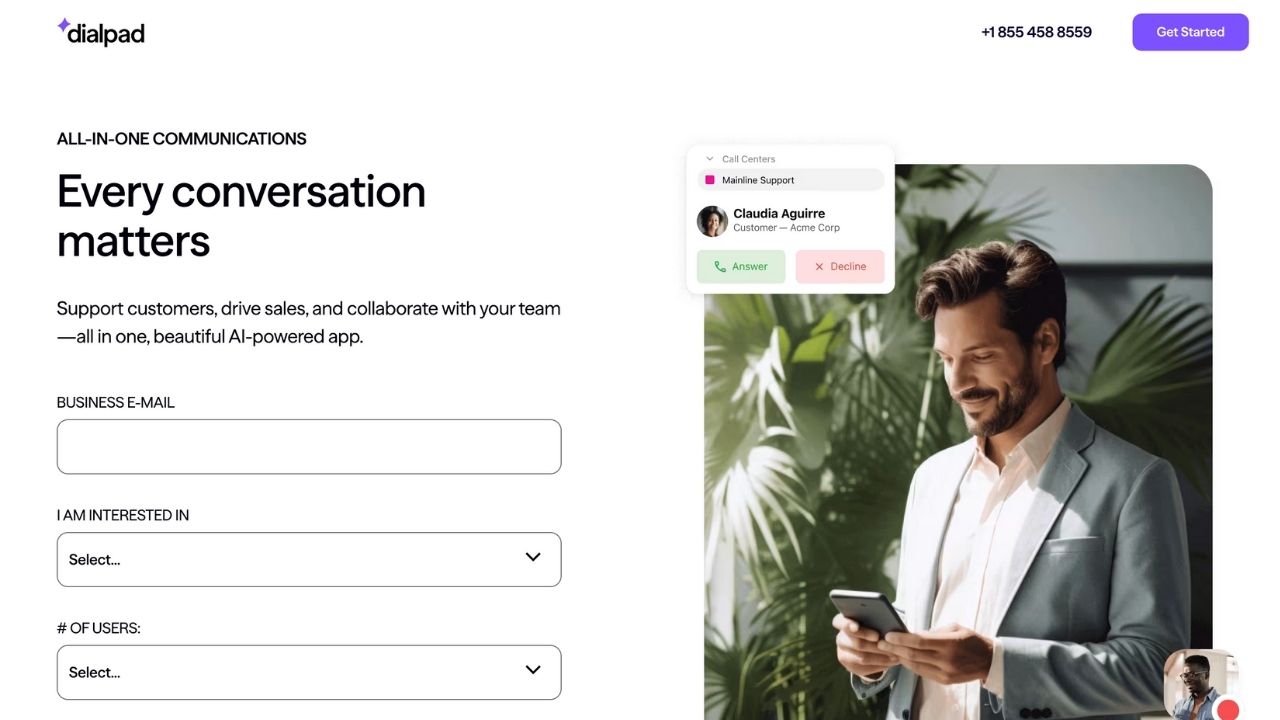
Best for: Stores that want AI-powered transcription and call analytics without paying extra.
Dialpad positions itself as the AI-first business phone system.
The standout feature is real-time transcription included on all plans, even the $15/user/month tier. Most competitors charge $40+ for transcription.
The AI features go beyond transcription. Dialpad offers sentiment analysis (flagging frustrated callers), automatic call summaries, and real-time coaching prompts for agents.
If you want detailed analytics on your support calls, this is strong.
The catch for ecommerce: the AI features analyze calls, but they don't integrate with your order data.
A frustrated caller triggers an alert, but your agent still has to manually look up their order in Shopify.
| Plan | Monthly Price/User | Key Features |
|---|---|---|
| Standard | $15 | Real-time transcription, call recording, messaging |
| Pro | $25 | Sentiment analysis, coaching, contact center lite |
| Enterprise | Custom | Full contact center, custom integrations |
Pros:
- Real-time AI transcription on all plans
- Sentiment analysis flags unhappy callers
- Clean, modern interface
- HIPAA compliance available
Cons:
- No direct ecommerce platform integrations
- AI is call-centric, not order-centric
- Limited SMS compared to competitors
- Per-user pricing still applies for seasonal scaling
4. Quo (formerly OpenPhone)
Best for: SMS-heavy ecommerce stores and startups that need unlimited texting.
Quo (recently rebranded from OpenPhone) stands out for one feature: unlimited SMS/MMS on all plans.
If you're sending order confirmations, shipping updates, and promotional texts, the unlimited SMS is a real advantage over competitors who cap messages or charge per text.
The platform also includes Sona, an AI receptionist that can answer basic calls and qualify inquiries.
It's not as ecommerce-specialized as Ringly.io's the AI, but it handles simple tasks without human intervention.
For Shopify integration, you'll need to build it yourself via Quo's API. That's feasible if you have development resources, but it's not plug-and-play.
| Plan | Monthly Price/User | SMS | AI Credits |
|---|---|---|---|
| Starter | $15 | Unlimited | 1,000 Sona credits/month |
| Business | $23 | Unlimited | 1,000 Sona credits/month |
| Scale | Custom | Unlimited | Custom allocation |
Pros:
- Unlimited SMS/MMS included on all plans
- Sona AI receptionist handles basic inquiries
- Modern, intuitive interface
- Full API for custom integrations
Cons:
- API integration required for Shopify (not native)
- Sona AI is general-purpose, not ecommerce-trained
- Smaller integration ecosystem than enterprise competitors
- Per-user pricing still applies
5. Zoom Phone
Best for: Budget-conscious stores already using Zoom for video.
Zoom Phone offers the lowest entry price on this list at $10/user/month for metered calling.
If you're already paying for Zoom Meetings and want to add phone capability, the integration is seamless.
The budget pricing comes with tradeoffs. SMS costs $0.01 per message (not included), which adds up fast for ecommerce order notifications.
There's no AI call handling. And the metered plan means unpredictable costs if call volume spikes.
For stores with low call volume that already use Zoom, it's a reasonable budget option.
For serious ecommerce phone support, it's too basic.
| Plan | Monthly Price/User | Minutes | SMS |
|---|---|---|---|
| Metered (US/Canada) | $10 | Pay per minute | $0.01/message |
| Unlimited (US/Canada) | $15 | Unlimited | $0.01/message |
| Pro Global Select | $20 | Unlimited | $0.01/message |
Pros:
- Lowest entry price at $10/user/month
- Seamless integration with Zoom Meetings
- Familiar interface for Zoom users
- Easy to add/remove seasonal users
Cons:
- SMS not included (charged per message)
- No AI call handling or automation
- No ecommerce-specific features
- Metered plan creates unpredictable costs
6. Aircall
Best for: Ecommerce stores with dedicated sales teams doing outbound calls.
Aircall is designed for sales and support teams that need power dialer features and deep CRM integration.
The platform serves 22,000+ companies and offers 260+ integrations, making it one of the most connected options.
For sales-focused ecommerce (think high-ticket items with phone-based selling), the power dialer and call analytics are valuable.
The AI Voice Agent can qualify leads and handle basic inquiries autonomously.
The pricing is the barrier for smaller stores. At $30/user/month minimum with a 3-user requirement, you're paying at least $90/month before making a single call.
That's expensive if you just need customer support.
| Plan | Monthly Price/User | Minimum Users | Key Features |
|---|---|---|---|
| Essentials | $30 | 3 | Basic calling, recording, integrations |
| Professional | $50 | 3 | Power dialer, advanced analytics, AI |
| Custom Enterprise | Contact sales | Varies | AI Voice Agent, white-label |
Pros:
- Power dialer for outbound sales campaigns
- Deep Salesforce and HubSpot integrations
- WhatsApp messaging built-in
- AI Voice Agent for autonomous call handling
Cons:
- 3-user minimum ($90/month floor)
- Higher price point than alternatives
- Sales-focused, not customer service-focused
- No native Shopify integration
7. Ooma
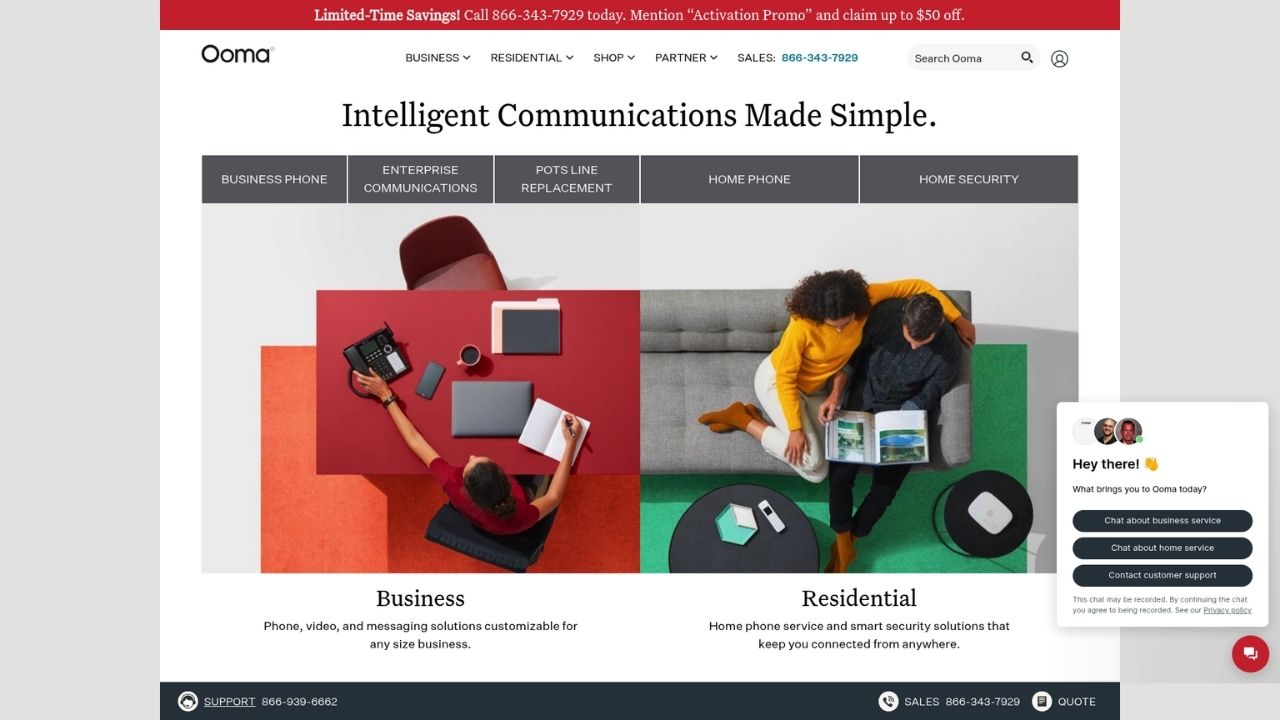
Best for: Small ecommerce stores on a tight budget that need basic phone service.
Ooma is the budget-friendly option for stores that need basic VoIP without the bells and whistles.
At $19.95/user/month, it includes unlimited calling and a virtual receptionist on all plans.
The 100+ features on the base plan cover the basics: call recording, voicemail, call forwarding, and mobile apps.
For a small store handling a few calls per day, it gets the job done.
The limitations are significant for growing ecommerce: no AI features, minimal integrations, no SMS mentioned in pricing, and no ecommerce platform connections.
This is a phone system, not an ecommerce communication platform.
| Plan | Monthly Price/User | Key Features |
|---|---|---|
| Essentials | $19.95 | Unlimited calling, virtual receptionist, recording |
| Pro | $24.95 | Enhanced features, advanced analytics |
| Pro Plus | $29.95 | Premium features, priority support |
Pros:
- Affordable entry price
- Virtual receptionist included on all plans
- Easy setup for non-technical users
- Unlimited calling (no per-minute charges)
Cons:
- No AI features or automation
- Limited integration ecosystem
- No native ecommerce integrations
- SMS capabilities not mentioned
Ringly.io: AI phone support for Shopify brands
Ringly is AI phone support for Shopify brands. Keep your current phone number, helpdesk, and workflows. Add an AI that handles the routine calls. Instead of growing your support headcount every time call volume goes up, the AI takes the routine inbound calls so your team can focus on the work that actually moves revenue.
The AI answers inbound calls 24/7. It finds orders in your Shopify store, processes returns and exchanges, answers product questions from your knowledge base, and rescues abandoned carts via outbound follow-up. Across 50+ brands, the AI resolves 73% of calls autonomously at roughly $0.42 per resolved call. Calls that need a human escalate cleanly to Gorgias, Richpanel, Reamaze, or whatever helpdesk you already run.
Plans: Grow $349/mo (1,000 minutes), Pro $799/mo (2,500 minutes), Enterprise custom. 14-day free trial on Pro. Live in under an hour. 65% resolution guarantee: if the AI resolves under 65% of your calls in 90 days, we refund the last 3 months.
Frequently Asked Questions
What is the most affordable RingCentral alternative?
Zoom Phone offers the lowest starting price at $10 per user per month for metered calling. For unlimited calling, Vonage starts at $13.99 per user per month, and Nextiva, Dialpad, and Quo all start at $15 per user per month.
Which RingCentral alternative has the best AI features?
Dialpad leads in AI capabilities with real-time transcription, AI Live Coach for real-time guidance, and automatic call summaries. Quo also includes their Sona AI agent on all plans, which can answer calls autonomously.
Are there any RingCentral alternatives that work well for small businesses?
Yes. Quo (formerly OpenPhone) and Vonage are both excellent for small businesses due to their simple setup and affordable pricing. Nextiva also offers a Core plan at $15 per user per month specifically designed for smaller teams.
What RingCentral alternative is best for sales teams?
Aircall is built specifically for sales teams with features like power dialing, voicemail drop, and deep Salesforce integration. Dialpad is also strong for sales with AI coaching and real-time transcription.
Can I keep my existing phone number when switching from RingCentral?
Yes, most RingCentral alternatives support number porting. The process typically takes 1-2 weeks. Quo, Nextiva, and Dialpad all offer free number porting assistance.
Which RingCentral alternative is best for international calling?
8x8 specializes in global communications with unlimited international calling plans covering multiple countries. They have strong PSTN coverage worldwide and are ideal for businesses with international operations.
Do any RingCentral alternatives include AI agents that can handle calls?
Yes, Quo includes Sona, an AI agent that can answer calls 24/7 on all plans. This is unique among the alternatives and particularly valuable for small teams that cannot staff phones around the clock.