
Nextiva has been a go-to business phone system for years, but it's not the right fit for everyone.
Maybe you're tired of per-user pricing that balloons as your team grows. Or perhaps you need features Nextiva doesn't offer, like true AI call handling or better international coverage.
Whatever your reason for looking elsewhere, you've got options.
From established players like RingCentral to newer AI-powered alternatives, there's likely a better match for how your business actually communicates.
Here are the seven best Nextiva alternatives worth considering in 2026.
Editor’s note: Want to hear some sample AI support calls made for your Shopify store?
- Just paste your store URL
- Get sample calls in under 20 seconds (no email required)
- Listen to demo calls for my store
What is Nextiva?
Nextiva is a unified communications platform that bundles VoIP calling, video meetings, team messaging, and light CRM features into one package. It's designed for businesses that want everything under one roof, with plans typically ranging from $18 to $46 per user per month.
For small teams, this bundled approach works fine. But as you scale, that per-user pricing model becomes painful. A 50-person team paying $30 per user is shelling out $1,500 monthly, whether those users make one call or one hundred.
Top Nextiva alternatives at a glance
Here's a quick comparison of all seven alternatives we'll cover:
| Alternative | Starting Price | Best For | Key Differentiator |
|---|---|---|---|
| Ringly | $349/month | E-commerce stores | AI agent that resolves calls, not just routes them |
| RingCentral | $25/user/month | Large enterprises | Most mature platform with 330+ integrations |
| Dialpad | $15/user/month | AI-focused teams | Best-in-class real-time transcription |
| 8x8 | Contact sales | Global businesses | Strong international presence (40+ countries) |
| Aircall | $30/license/month | Sales/support teams | 100+ CRM integrations, collaborative inbox |
| Vonage | $19.99/line/month | Flexible line needs | Per-line pricing, established provider |
| Grasshopper | $14/month | Solopreneurs | Simple virtual number, account-based pricing |
The Best Nextiva Alternatives for 2026
1. Ringly

Ringly isn't a traditional VoIP system. It's an AI phone agent named the AI that actually handles your calls instead of just routing them to humans.
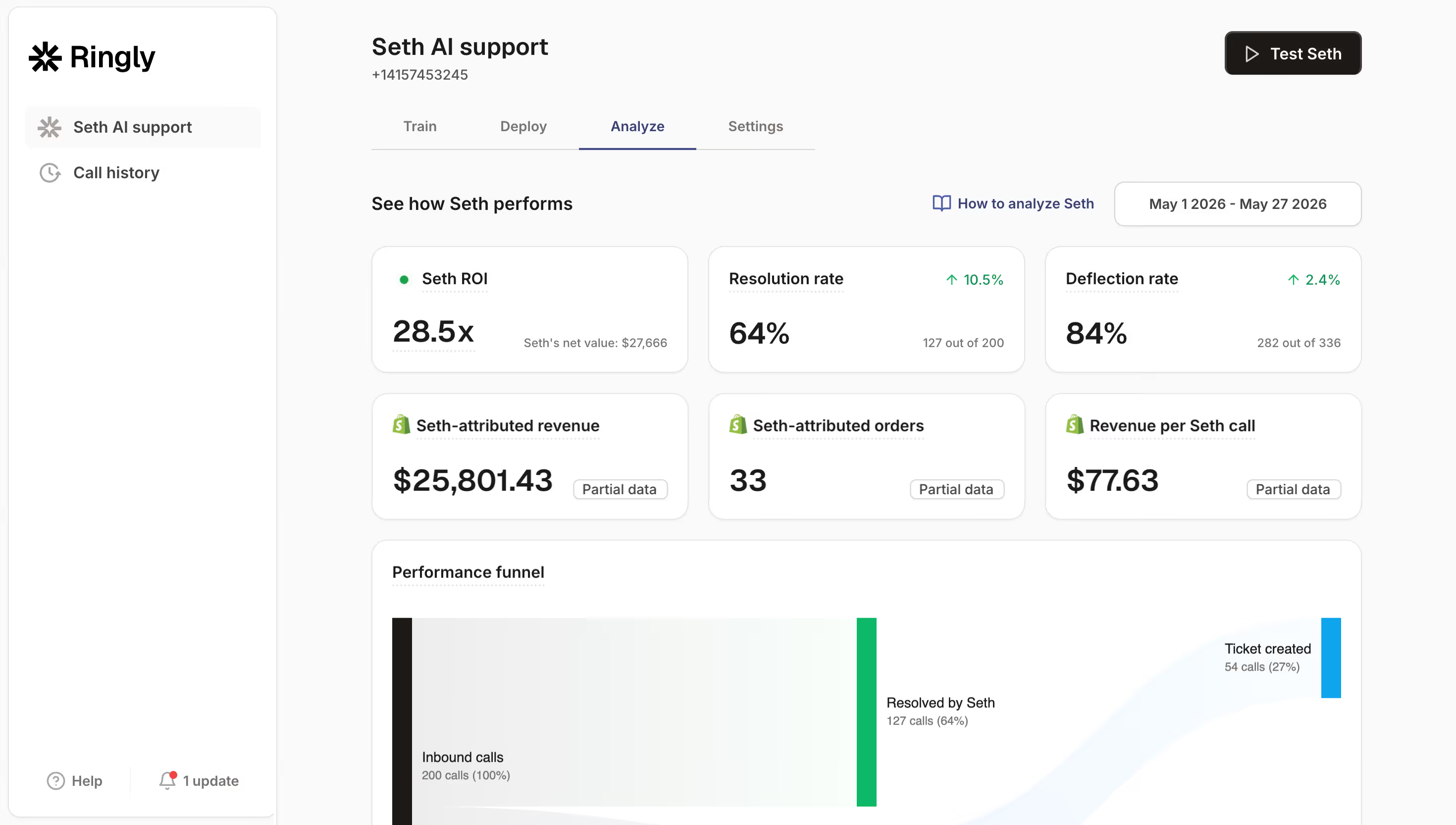
Here's how it works: the AI answers calls 24/7, looks up orders, processes returns, answers FAQs, and only escalates complex issues to your team. For e-commerce businesses, this means customers get instant help with "where's my order" queries without tying up your staff.
The numbers are compelling. The AI resolves around 73% of calls without human intervention across the Shopify stores using the platform. That's not deflecting calls to voicemail. It's actually solving customer problems.
Key features:
- 24/7 AI call handling with no per-user costs
- Native Shopify integration for order lookups and returns
- Support for 40+ languages
- quick setup with no technical skills needed
- Call recordings and analytics dashboard
Pricing:
| Plan | Monthly Price | Minutes Included | Best For |
|---|---|---|---|
| Grow | $349 | 1,000 | Growing stores with regular call volume |
| Enterprise | Custom | 5,000+ | High-volume stores, enterprise |
Overage minutes cost $0.19. All plans include a 14-day free trial.
The bottom line: If you run an e-commerce store and want to automate repetitive phone support, Ringly represents a fundamentally different approach from traditional VoIP. You're paying for resolutions, not seats.
2. RingCentral

RingCentral is the most established Nextiva competitor, serving over 400,000 businesses with a mature UCaaS platform that's hard to match for reliability and feature depth.
What sets RingCentral apart is the sheer breadth of capabilities. You get voice, video, messaging, fax, and contact center options all in one ecosystem. The platform boasts 330+ pre-built integrations and 500+ APIs, so it'll connect to virtually any business tool you're already using.
The AI features have improved significantly too. Real-time transcription, automatic meeting summaries, and live translation across 15+ languages come standard. The AI Receptionist add-on ($39/month) can handle intelligent call routing and appointment booking.
Key features:
- 99.999% uptime SLA (less than 6 minutes downtime per year)
- Video meetings up to 200 participants
- Multi-level auto attendant and IVR
- Advanced call monitoring (whisper, barge, take over)
- 330+ integrations including Salesforce, HubSpot, Zendesk
Pricing:
| Plan | Annual Price | Monthly Price | Key Features |
|---|---|---|---|
| Core | $25/user | $35/user | Unlimited US/CA calling, 100 toll-free min, AI transcription |
| Advanced | $30/user | $40/user | CRM integrations, 1,000 toll-free min, automatic recording |
| Ultra | $40/user | $50/user | 10,000 toll-free min, unlimited storage, webinars |
RingCX Contact Center starts at $65 per agent monthly. Free trial available for 14 days.
The catch: RingCentral's biggest downside is the cancellation process. You can only cancel by phone, and users report long wait times and billing issues even after requesting cancellation.
The bottom line: For enterprises that need proven reliability and extensive integrations, RingCentral's the safest bet. Just be prepared for a potentially frustrating exit if you ever switch away.
3. Dialpad

Dialpad positions itself as the AI-first alternative to traditional business phone systems. Founded in 2011, the platform puts artificial intelligence at the center of everything, not as an afterthought.
The standout feature is real-time transcription. Every call gets transcribed live, with AI-generated summaries and action items delivered immediately after. For sales teams, that means no more scribbling notes during calls or trying to remember what was promised.
Voice intelligence goes further, analyzing sentiment and providing live coaching prompts. Managers can review call scores and identify coaching opportunities without listening to full recordings.
Key features:
- Real-time call transcription on all plans
- AI Recaps with automatic summaries and action items
- Live sentiment analysis and coaching
- Video meetings and team messaging
- 45+ integrations including major CRMs
Pricing:
| Plan | Annual Price | Monthly Price | Key Features |
|---|---|---|---|
| Standard | $15/user | $23/user | Unlimited calls, AI meetings, real-time transcripts |
| Pro | $25/user | $35/user | CRM integrations, 24/7 support, multiple offices |
| Enterprise | Custom | Custom | SSO, unlimited offices, 99.9% uptime SLA |
The catch: Users report occasional call quality issues and slow SMS approval processes. Customer support can be inconsistent when problems arise.
The bottom line: If AI-powered conversation intelligence matters to your workflow, Dialpad offers the most mature implementation at a competitive price.
4. 8x8
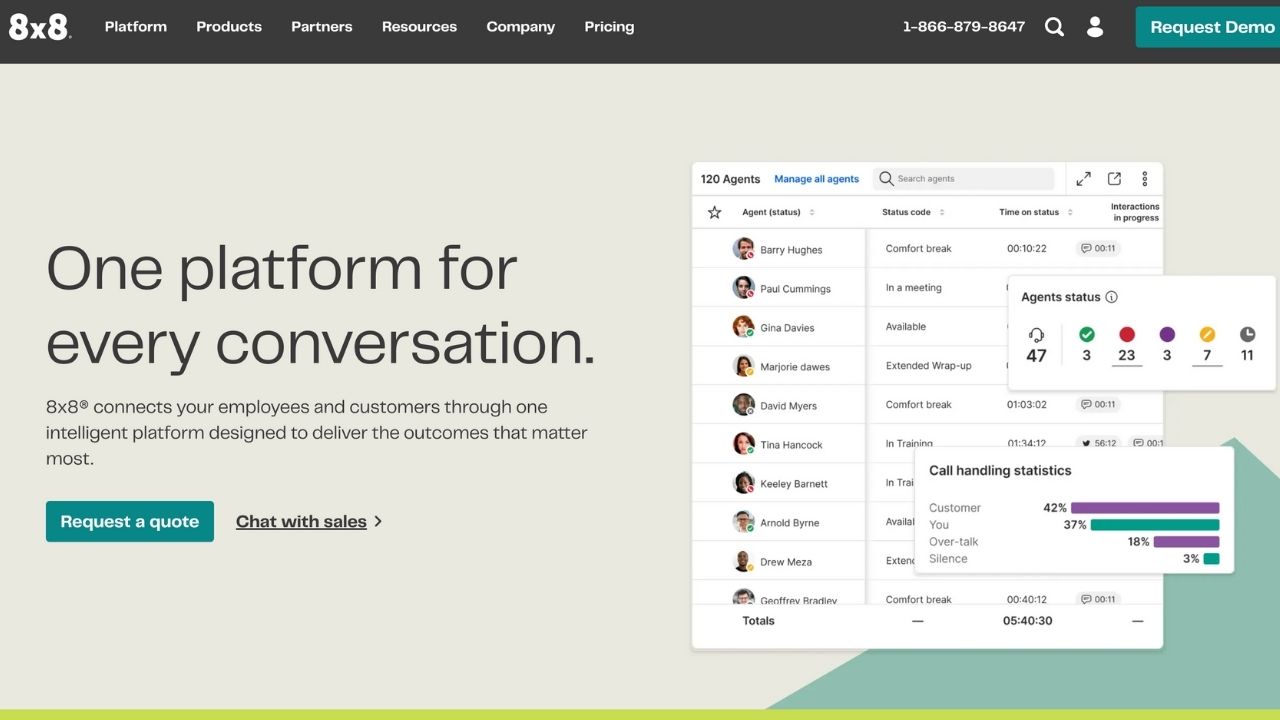
8x8 has been in the communications game since 1987, making it one of the most experienced players in the space. The platform emphasizes global reach, with coverage in over 40 countries and strong international calling capabilities.
Unlike competitors who publish transparent pricing, 8x8 requires you to contact sales for quotes. This can be frustrating if you're in early research mode, but it also means pricing can be negotiated based on your specific needs.
The platform shines for distributed teams. Omnichannel support spans voice, chat, email, and social media. Analytics cover both real-time and historical data across all channels. For companies with international offices, 8x8's global infrastructure provides consistent service quality.
Key features:
- Cloud VoIP and unified communications
- Omnichannel contact center
- Global coverage in 40+ countries
- Call recording and quality monitoring
- 60+ integrations
Pricing: Contact sales for all plans. The X2 through X8 tiers offer increasing capabilities, with X6 and above adding full contact center features.
The catch: No published pricing means you can't quickly compare costs. Users also report difficulty canceling contracts and occasional slow support response.
The bottom line: For international businesses or those with complex global communication needs, 8x8's infrastructure and coverage are tough to beat.
5. Aircall

Aircall was built specifically for modern sales and support teams that live in their CRM. With 100+ integrations and a collaborative shared inbox, it bridges the gap between phone calls and your existing workflow tools.
The platform requires a 3-seat minimum, which immediately rules out solo operators. But for teams of three or more, Aircall offers features that make phone work more collaborative. Multiple team members can view and manage calls from a shared inbox. Managers can monitor calls live and provide whisper coaching without callers hearing.
AI features include call transcription and sentiment analysis, though these are currently limited to English and French only.
Key features:
- Unlimited US/Canada calling
- Shared call inbox for team collaboration
- 100+ integrations including Salesforce, HubSpot, Pipedrive
- Call monitoring and whisper coaching
- Business SMS (select countries)
Pricing:
| Plan | Price | Minimum Users | Key Features |
|---|---|---|---|
| Essentials | $30/license | 3 | Unlimited calls, 1 number, basic analytics |
| Professional | $50/license | 3 | Unlimited recording, advanced analytics, queueing |
| Custom | Contact sales | 25 | International bundles, Analytics+ |
Additional numbers cost $6 per month. Free trial runs 7 days.
The catch: The 3-seat minimum is a barrier for small teams. AI features are limited to English and French. Support quality receives mixed reviews.
The bottom line: For sales and support teams that need deep CRM integration and collaborative calling features, Aircall delivers where simpler VoIP systems come up short.
6. Vonage
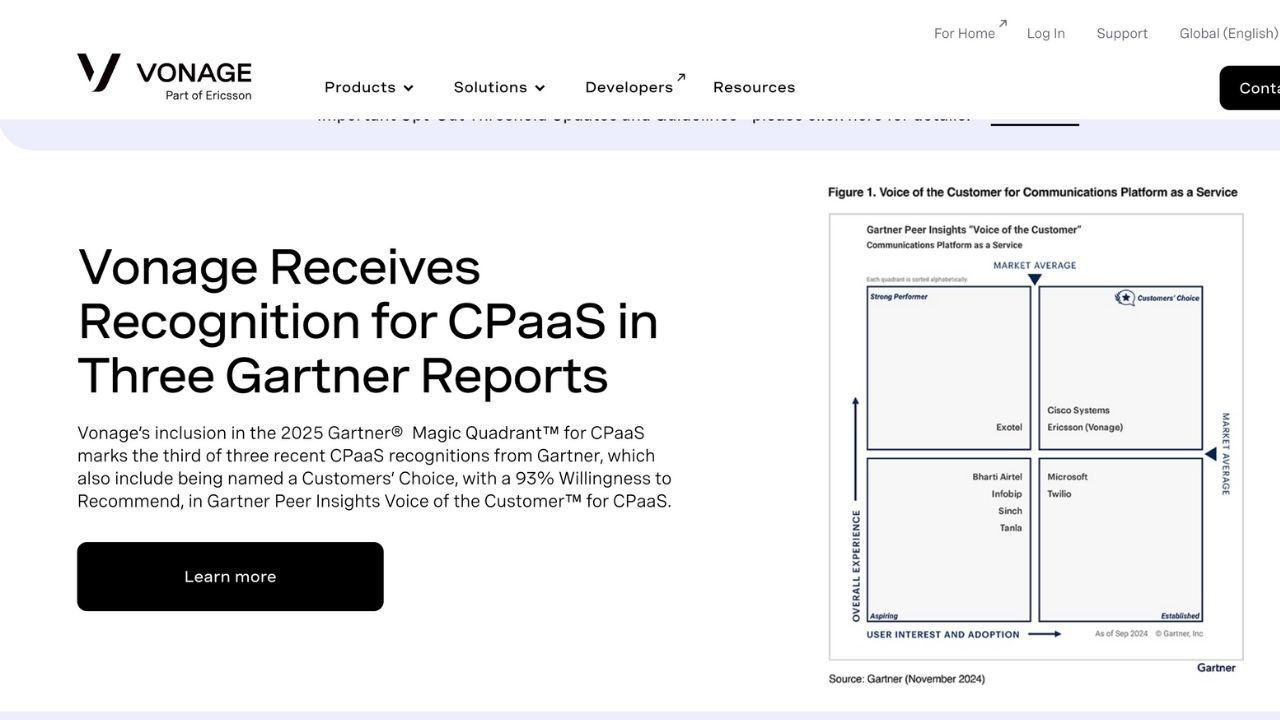
Vonage has been a household name in VoIP since 2001. Acquired by Ericsson in 2022, the company brings enterprise-grade infrastructure and the stability of a major telecom player.
The platform offers flexible per-line pricing rather than strict per-user models, which can benefit teams with varying usage patterns. Advanced call management features include visual voicemail, call groups, and virtual receptionist features.
Integration options cover the major CRMs, though the ecosystem is smaller than RingCentral's. AI features exist but are less mature than Dialpad's offerings.
Key features:
- Cloud VoIP with established infrastructure
- Video conferencing and team messaging
- Advanced call routing and management
- Business SMS capabilities
- 20+ integrations
Pricing:
| Plan | Price | Key Features |
|---|---|---|
| Mobile | $19.99/line/month | Basic calling, mobile app |
| Premium | $29.99/line/month | Auto attendant, video conferencing |
| Advanced | $39.99/line/month | Call recording, CRM integration, visual voicemail |
The catch: CRM integrations are limited to higher-tier plans. Add-ons can get expensive. Support response times are slower than some competitors.
The bottom line: Vonage offers the reliability of an established provider with flexible line-based pricing. It's a solid choice for businesses that prioritize stability over cutting-edge features.
7. Grasshopper

Grasshopper takes a completely different approach from the others on this list. Instead of per-user pricing, you pay per account. Instead of feature bloat, you get simple call forwarding and business number management.
This is a virtual phone system, not a full UCaaS platform. You won't find video conferencing, extensive integrations, or AI features. What you do get is a professional business number that forwards to your existing phones, with basic extensions and voicemail transcription.
The platform is only available in the US and Canada, which limits its appeal for international businesses.
Key features:
- Virtual phone numbers (local, toll-free, vanity)
- Call forwarding to any phone
- Business texting
- Voicemail transcription
- Mobile and desktop apps
Pricing:
| Plan | Annual Price | Extensions | Numbers |
|---|---|---|---|
| True Solo | $14/month | 1 | 1 |
| Solo Plus | $25/month | 3 | 1 |
| Small Business | $55/month | Unlimited | 4 |
The catch: No video conferencing. Limited integrations. Not suitable for teams needing advanced features. US/Canada only.
The bottom line: For solopreneurs and micro-businesses that just need a professional business number without complexity, Grasshopper keeps things simple and affordable.
How to Choose the Right Nextiva Alternative
With seven solid options, how do you pick? Here's a quick decision framework:
Choose Ringly if: You run an e-commerce store and want to automate repetitive phone support. The AI agent approach fundamentally changes the economics of phone support.
Choose RingCentral if: You need enterprise-grade reliability, extensive integrations, and don't mind paying for the most mature platform in the space.
Choose Dialpad if: AI-powered conversation intelligence, transcription, and call coaching matter to your sales or support teams.
Choose 8x8 if: You operate internationally and need consistent service quality across multiple countries.
Choose Aircall if: Your team lives in CRMs and needs collaborative calling features with deep integrations.
Choose Vonage if: You want an established provider with flexible per-line pricing and don't need the latest AI features.
Choose Grasshopper if: You're a solopreneur or micro-business that just needs a simple business number without complexity.
Why AI Phone Agents Are the Emerging Alternative
There's a fundamental shift happening in business phone systems. Traditional VoIP platforms (including Nextiva and most alternatives above) focus on routing calls to humans. The phone system connects the caller to the right person, then steps aside.
AI phone agents like Ringly's the AI take a different approach. They actually handle the conversation, resolving issues without human involvement. This isn't an IVR that frustrates customers with menu trees. It's a conversational AI that understands context, looks up data, and takes action.
The cost model changes too. Instead of paying per seat regardless of call volume, you pay for what you use. A store getting 500 calls monthly pays for those 500 interactions, not for 10 agent seats sitting idle during slow periods.
This approach isn't for everyone. Complex B2B sales calls still need human expertise. But for repetitive, predictable support tasks (order status, returns, FAQs), AI agents can resolve most calls instantly, 24/7.
Making the Switch from Nextiva
If you're ready to move on from Nextiva, here's how to make the transition smooth:
- Check your contract terms. Note cancellation requirements and notice periods. Some plans require 30-60 days notice.
- Export your data. Download call logs, contact lists, and any recordings you need to keep. Do this before canceling.
- Plan number porting. Transferring your existing business number typically takes 1-2 weeks. Start this process early to avoid downtime.
- Set up parallel systems. Run your new platform alongside Nextiva during the transition. Forward calls to test the new setup before cutting over completely.
- Train your team. Schedule time for staff to learn the new interface and features. Even intuitive platforms need some orientation.
- Test everything. Make test calls, check voicemail, verify integrations. Catch issues before customers do.
Start Automating Your Phone Support Today
If you're running an e-commerce store and spending too much time on repetitive phone calls, there's a better way. Ringly's AI phone agent The AI handles the routine stuff (order lookups, returns, FAQs) so you can focus on growing your business.
Setup takes about three minutes. No technical skills required. You can be up and running with a free 14-day trial to see how AI phone support works for your store.
With 73% of calls resolved without human intervention on average, you might wonder why you ever paid per seat for phone support in the first place.
Frequently Asked Questions
Which Nextiva alternative offers the best value for small businesses?
For very small teams, Grasshopper at $14/month is the cheapest option. For growing businesses wanting full features, Dialpad at $15/user/month offers strong AI capabilities at a competitive price. E-commerce stores should consider Ringly's per-minute model, which can be more economical than per-seat pricing if call volume is moderate.
Can I keep my existing business number when switching from Nextiva?
Yes, all the alternatives listed support number porting. The process typically takes 1-2 weeks and most providers will guide you through it. Start the porting process before canceling Nextiva to avoid service interruption.
What's the main difference between traditional VoIP and AI phone agents like Ringly?
Traditional VoIP systems route calls to human agents. AI phone agents actually handle the conversation, resolving customer issues without human involvement. Ringly's the AI, for example, can look up orders, process returns, and answer FAQs autonomously, escalating only complex issues to your team.
Which Nextiva alternative has the best AI features?
Dialpad leads for real-time transcription and conversation intelligence. For actual call automation (not just transcription), Ringly's AI agent The AI resolves calls without human intervention. RingCentral offers solid AI add-ons including receptionist features and meeting summaries.
Is RingCentral really better than Nextiva?
RingCentral offers more mature integrations, better reliability (99.999% uptime SLA), and a broader feature set. However, it's also more complex and potentially more expensive. The 'better' choice depends on your specific needs. RingCentral shines for enterprises needing scale, while smaller teams might find it overkill.
How much can I save by switching from Nextiva?
Savings depend on your team size and call patterns. A 20-person team on Nextiva's $30 plan pays $600 monthly. The same team on Dialpad's $15 plan pays $300, saving $3,600 annually. E-commerce stores using Ringly often see savings from reduced human agent hours, not just lower software costs.
Do these Nextiva alternatives integrate with Shopify?
Ringly offers native Shopify integration, pulling order data directly for customer lookups. Other alternatives like RingCentral, Dialpad, and Aircall integrate with Shopify through third-party connectors or Zapier, though not as deeply as Ringly's purpose-built e-commerce integration.