

Kustomer built its reputation on a CRM-native approach to customer service, but that sophistication comes at a cost.
At $89 to $139 per user per month with an 8-seat minimum, many teams find themselves paying over $700 monthly before adding AI features that cost extra per conversation.
The platform's also known for complexity. Setup takes time, the learning curve is steep, and some users report rigid reporting that doesn't bend to their needs.
If you're looking for something more flexible, more affordable, or simply better suited to your specific industry, you've got options.
This article breaks down seven Kustomer alternatives worth considering in 2026, covering everything from enterprise powerhouses to specialized ecommerce tools.
Editor’s note: Want to hear some sample AI support calls made for your Shopify store?
- Just paste your store URL
- Get sample calls in under 20 seconds (no email required)
- Listen to demo calls for my store
What to look for in a Kustomer alternative
Before diving into specific tools, it helps to know what matters most for your situation.
Pricing transparency is what many teams care about most. Kustomer's base pricing is already premium, and add-ons like AI at $0.60 per engaged conversation can balloon costs quickly. Look for tools with clear pricing tiers and predictable costs.
Ease of setup matters more than most vendors will admit. A platform that takes weeks to configure delays your time to value and frustrates your team.
Omnichannel capabilities are table stakes now, but not all omnichannel is equal. True omnichannel means conversations flow seamlessly across channels with full context. Multichannel just means you can answer tickets from different places.
Industry fit will make or break your experience. Ecommerce stores have different needs than SaaS companies. Phone-heavy businesses need voice capabilities that chat-first platforms often treat as afterthoughts.
Quick comparison: Kustomer alternatives at a glance
| Tool | Starting Price | Best For | Key Strength |
|---|---|---|---|
| Ringly.io | $349/mo | Ecommerce phone support | AI phone agent with 73% resolution rate |
| Zendesk | $19/agent/mo | Enterprises | Most comprehensive feature set |
| Freshdesk | Free, then $19/agent/mo | Small to mid-sized teams | Generous free plan, easy setup |
| Gorgias | $10/mo | Ecommerce | Deep Shopify integration |
| Intercom | $29/seat/mo | SaaS companies | Proactive messaging and Fin AI |
| HubSpot Service Hub | Free, then $9/seat/mo | HubSpot CRM users | Unified CRM and support data |
| Zoho Desk | Free, then $7/user/mo | Budget-conscious teams | Full features at low price |
1. Ringly.io

If your ecommerce store handles phone calls, Ringly.io offers something most help desks don't: an AI phone agent that actually works.
the AI, Ringly's AI phone support rep, handles inbound calls 24/7. It looks up orders, processes returns and exchanges, answers FAQs, and only escalates to your team when it's needed. The platform resolves around 73% of calls without human intervention across more than Shopify stores.
Setup takes about three minutes. Connect your Shopify store, pick a phone number, and the AI starts learning your products and policies. You can upload custom knowledge bases to train it on specific details about your catalog.
Pricing:
| Plan | Monthly Price | Minutes Included | Key Features |
|---|---|---|---|
| Grow | $349 | 1,000 | Self-learning AI, store data integration, recordings |
| Enterprise | Custom | 5,000+ | Private Slack channel, custom setup, custom integrations |
Overage runs $0.19 per minute. Additional phone numbers cost around $5 per month. The 14-day free trial lets you test with full features before committing.
Pros:
- Handles 73% of calls autonomously
- Deep Shopify integration for order lookups and returns
- Supports 30 languages for global stores
- 24/7 coverage without hiring additional staff
Cons:
- Phone-focused (not a full help desk replacement)
- Requires Shopify for full functionality
2. Zendesk

Zendesk remains the category leader for a reason. It offers the most comprehensive feature set for teams that need enterprise-grade support infrastructure.
The platform covers every channel: email, chat, phone, social media, and messaging apps. AI capabilities include generative replies, copilot assistance for agents, and advanced analytics. With over 1,000 integrations in their marketplace, Zendesk connects to virtually any tool in your stack.
Pricing:
| Plan | Annual Price | Monthly Price | Key Features |
|---|---|---|---|
| Support Team | $19/agent/mo | $25/agent/mo | Email ticketing, social support, 1,000+ integrations |
| Suite Team | $55/agent/mo | $69/agent/mo | AI agents, messaging, live chat, phone support |
| Suite Professional | $115/agent/mo | $149/agent/mo | Copilot tools, 5 help centers, skills-based routing |
| Suite Enterprise | $169/agent/mo | $219/agent/mo | 300 help centers, sandbox, custom roles |
The Copilot AI assistant adds $50 per agent per month as an optional add-on.
Pros:
- Most mature platform with proven reliability
- Extensive customization options
- Best-in-class integration ecosystem
- Skills-based routing on higher tiers
Cons:
- Can feel overwhelming for smaller teams
- Advanced features require higher-priced plans
- Implementation complexity rivals Kustomer
3. Freshdesk

Freshdesk positions itself as the friendly alternative to complex enterprise tools. It delivers solid functionality without the steep learning curve.
The free plan supports up to two agents for six months, making it ideal for startups testing the waters. Paid plans add Freddy AI for automation and insights, omnichannel support, and gamification features to keep agents engaged.
Pricing:
| Plan | Annual Price | Key Features |
|---|---|---|
| Free | $0 | Up to 2 agents, basic ticketing, knowledge base |
| Growth | $19/agent/mo | Ticketing, customer portal, 500 Freddy AI sessions |
| Pro | $55/agent/mo | Custom objects, advanced ticketing, 5,000 collaborators |
| Enterprise | $89/agent/mo | Audit logs, approval workflows, skills-based assignment |
Additional Freddy AI sessions cost $49 per 100 after the included limit.
Pros:
- Generous free plan for small teams
- User-friendly interface requires minimal training
- Strong automation features at lower price points
- 5,000 collaborators on Pro and Enterprise plans
Cons:
- AI features cost extra beyond included limits
- Less customizable than Zendesk
- Reporting capabilities have limits compared to premium tools
4. Gorgias

Built specifically for ecommerce, Gorgias understands that order-related questions dominate support queues for online stores.
The platform integrates deeply with Shopify, Magento, BigCommerce, and WooCommerce. Agents can edit orders, process refunds, cancel orders, and check tracking directly from the inbox without switching tabs. This saves a lot of time on repetitive tasks.
Pricing:
| Plan | Monthly Price | Annual Price | Tickets/Month | AI Interactions |
|---|---|---|---|---|
| Starter | $10 | N/A | 50 | $1.00 per resolution |
| Basic | $60 | $50 | 300 | 60 included |
| Pro | $360 | $300 | 2,000 | 600 included |
| Advanced | $900 | $750 | 5,000 | 2,500 included |
| Enterprise | Custom | Custom | 5,000+ | Custom |
Overage costs run $36-40 per 100 helpdesk tickets or $150 per 100 AI interactions.
Pros:
- Best-in-class ecommerce integrations
- Order management without leaving the inbox
- Revenue statistics tracking
- 150+ integrations including Klaviyo and Recharge
Cons:
- Ticket-based pricing can get expensive at scale
- Not ideal for non-ecommerce businesses
- AI overage costs add up quickly
5. Intercom
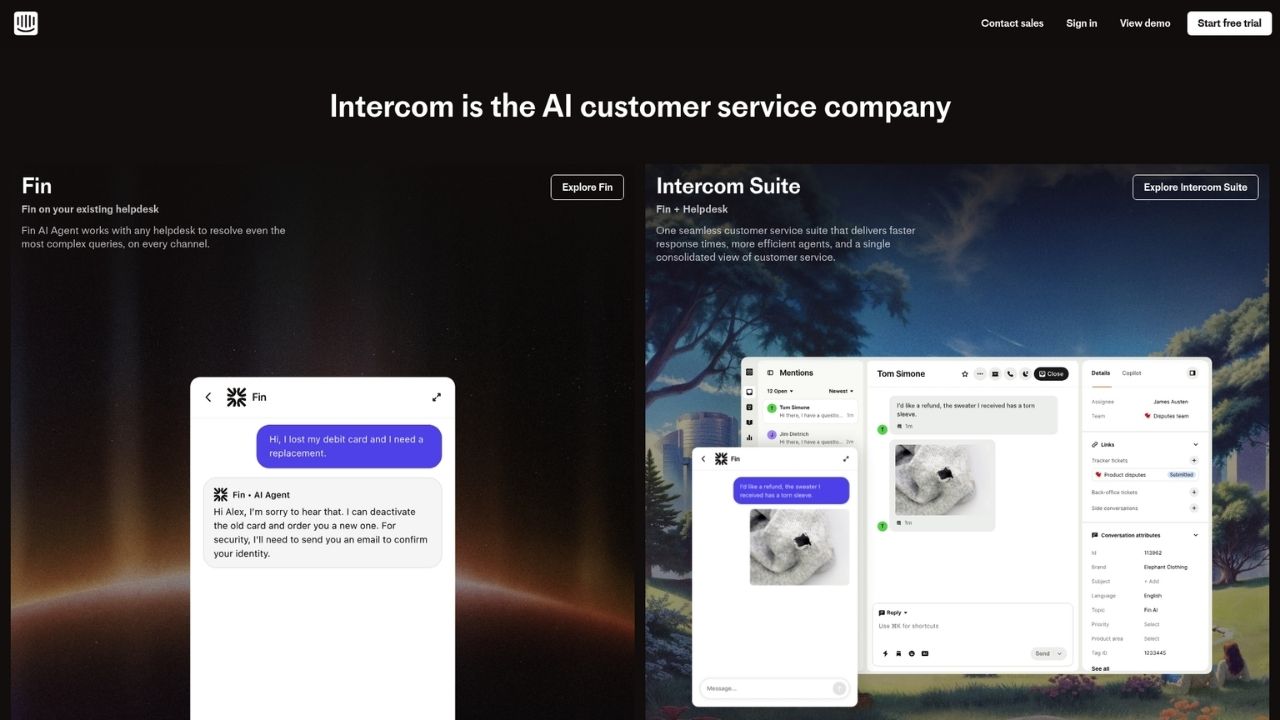
Intercom pioneered the modern messaging approach to customer support. Their Fin AI Agent represents some of the most sophisticated conversational AI available.
The platform's strength is proactive support: product tours, in-app surveys, and targeted campaigns that reach customers before they open a ticket. This makes it particularly valuable for SaaS companies focused on engagement and retention.
Pricing:
| Plan | Annual Price | Key Features |
|---|---|---|
| Essential | $29/seat/mo | Fin AI Agent ($0.99/resolution), messenger, 1 help center |
| Advanced | $85/seat/mo | Multiple inboxes, workflow automation, 20 free Lite seats |
| Expert | $132/seat/mo | SSO, HIPAA support, SLAs, multibrand messenger |
Add-ons include Copilot at $29 per agent per month and Proactive Support Plus at $349 per month.
Pros:
- Fin AI with usage-based pricing (pay only for resolutions)
- Excellent proactive messaging capabilities
- Strong in-app support features
- 450+ app integrations
Cons:
- Per-resolution AI pricing can be unpredictable
- Less robust for traditional ticket-based support
- Higher per-seat cost than some competitors
6. HubSpot Service Hub
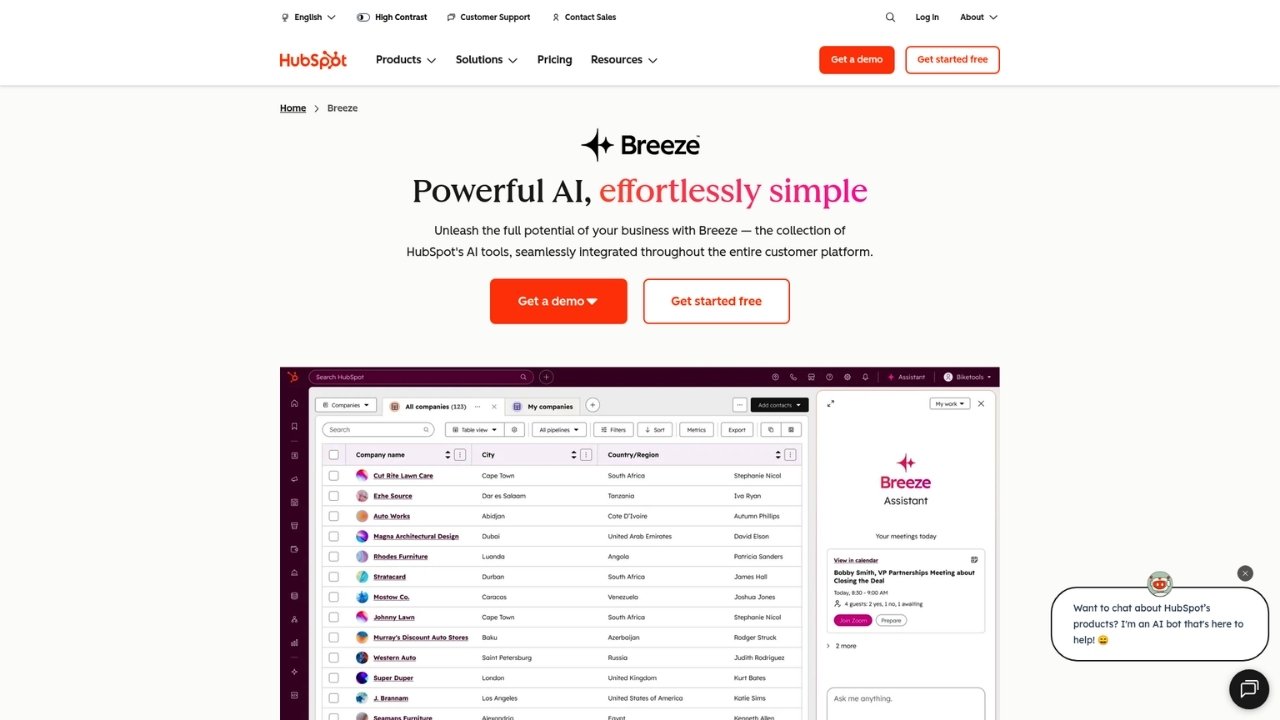
For teams already invested in the HubSpot ecosystem, Service Hub offers seamless integration that unifies customer data across marketing, sales, and support.
The platform includes ticketing, automation, knowledge base, and customer feedback tools. Built-in surveys for NPS, CSAT, and CES help you measure satisfaction without third-party tools. The customer success workspace gives account managers visibility into health scores and engagement.
Pricing:
| Plan | Annual Price | Monthly Price | Key Features |
|---|---|---|---|
| Free | $0 | $0 | Up to 2 users, basic ticketing, live chat |
| Starter | $9/seat/mo | $20/seat/mo | Ticket pipelines, routing, 500 HubSpot Credits |
| Professional | $90/seat/mo | $100/seat/mo | Help desk workspace, knowledge base, 3,000 Credits |
| Enterprise | $150/seat/mo | Custom | Skill-based routing, conditional SLAs, IVR, 5,000 Credits |
Professional requires a $1,500 onboarding fee. Enterprise requires $3,500.
Pros:
- Native CRM integration eliminates data silos
- Strong customer feedback and survey tools
- Breeze AI Customer Agent included
- 1,500+ app integrations
Cons:
- Onboarding fees add significant upfront cost
- Best value only if you're already using HubSpot
- Lower tiers lack advanced features
7. Zoho Desk

Zoho Desk shows that you don't need enterprise budgets for enterprise features. At $7 per user per month for the entry paid plan, it costs less than most competitors while still delivering comprehensive functionality.
The platform includes Zia, an AI assistant for sentiment analysis and auto-tagging. AI Agents handle automated support tasks. Blueprints, Zoho's visual workflow builder, lets you create complex automation without coding.
Pricing:
| Plan | Annual Price | Key Features |
|---|---|---|
| Free | $0 | 3 users, email ticketing, basic features |
| Express | $7/user/mo | Email, social media, web forms, workflows |
| Standard | $14/user/mo | Live chat, instant messaging, knowledge base |
| Professional | $23/user/mo | Telephony, Blueprints automation, multi-department |
| Enterprise | $40/user/mo | AI Agents, Zia AI, skill-based routing, sandbox |
Pros:
- Lowest cost for full-featured support
- AI features included at affordable tiers
- Strong integration with Zoho suite
- 40+ language support
Cons:
- Best value requires commitment to Zoho ecosystem
- Interface less polished than premium competitors
- Smaller third-party integration marketplace
How to choose the right Kustomer alternative
The best choice depends on your specific situation.
For ecommerce stores: Gorgias offers the deepest platform integrations for order management. Ringly.io fills the phone support gap that most help desks ignore. If you handle significant call volume, combining a traditional help desk with Ringly's AI phone agent covers all channels.
For budget-conscious teams: Zoho Desk delivers the most features per dollar. Freshdesk's free plan works well for tiny teams testing the waters.
For enterprises: Zendesk remains the safe choice with the most mature infrastructure. HubSpot Service Hub makes sense if you're already using their CRM.
For SaaS companies: Intercom's proactive messaging and in-app support align well with product-led growth strategies.
Getting started with your new customer support platform
Migration planning makes or breaks a platform switch. Start by auditing your current tickets to understand volume by channel and issue type. This data guides your selection and helps you negotiate appropriate tiers.
Test with a small team before rolling out to everyone. Most platforms offer free trials or freemium tiers that let you validate the fit before committing.
If phone support is part of your mix, consider how you'll handle those interactions. Most help desks treat voice as a secondary channel. Ringly.io offers a different approach: an AI phone agent that handles routine calls automatically, escalating only complex issues to your team. You can start a 14-day free trial to see how it fits your workflow.
The right tool should make your team more productive, not add overhead. Choose based on your actual needs, not the feature list that looks most impressive.
Meta description: Looking for Kustomer alternatives? Compare the 7 best options for 2026, including pricing, features, and ideal use cases for every business size.
Frequently Asked Questions
What should I consider when evaluating Kustomer alternatives for my business?
Focus on pricing transparency, ease of setup, and whether the tool supports your primary support channels. Ecommerce businesses should prioritize Shopify integration and phone support capabilities. Enterprise teams need robust reporting and customization. Always test with a free trial before committing.
Are there any free Kustomer alternatives worth trying?
Yes. Freshdesk offers a free plan for up to 2 agents for 6 months. Zoho Desk provides a free tier for 3 users with basic ticketing. HubSpot Service Hub also has a free plan for up to 2 users. These work well for small teams or those testing the waters.
Which Kustomer alternatives work best for ecommerce stores?
Gorgias leads for ecommerce with deep Shopify, Magento, and BigCommerce integrations that let you manage orders directly from the inbox. Ringly.io specializes in AI phone support for ecommerce, handling order lookups, returns, and FAQs automatically. Many stores use both: Gorgias for tickets and Ringly for phone calls.
How do Kustomer alternatives compare on AI features?
Intercom's Fin AI charges per resolution ($0.99), making costs predictable. Zendesk offers AI agents and copilot tools at higher tiers. Zoho Desk includes Zia AI and AI Agents at its most affordable tier ($40/user/mo). Ringly.io's The AI resolves 73% of phone calls without human intervention.
What is the most affordable Kustomer alternative for a growing team?
Zoho Desk starts at $7 per user per month with comprehensive features. Freshdesk begins at $19 per agent monthly with a solid feature set. Both undercut Kustomer's $89 entry point significantly. For phone-specific needs, Ringly.io starts at $349 per month regardless of agent count.
Can I migrate from Kustomer to one of these alternatives easily?
Most platforms offer migration tools or services. Zendesk and Freshdesk have established migration paths from major platforms. Zoho Desk provides free onboarding and migration assistance. HubSpot offers dedicated onboarding for Professional and Enterprise tiers. Plan for some data cleanup regardless of the tool.
Which Kustomer alternative offers the best phone support capabilities?
Ringly.io specializes in AI phone support with an agent that handles 73% of calls autonomously. For traditional phone support, Zendesk and Zoho Desk include telephony integrations at higher tiers. HubSpot Service Hub offers calling minutes and IVR on Professional and Enterprise plans. Most other alternatives treat phone as a secondary feature.