
Ecommerce fraud isn't slowing down. Global losses hit $48 billion in 2025, chargebacks are surging 41%, and the average merchant now loses $4.61 for every single dollar of fraud. If you sell online, these numbers affect your bottom line directly.
We pulled together 52 of the most important ecommerce fraud statistics from sources like Juniper Research, LexisNexis, the Merchant Risk Council, Mastercard, and more. Here's what the data actually says.
Hear what AI support calls sound like for your store. Just paste your Shopify URL and get sample calls in under 20 seconds, no email required. Listen to demo calls for my store.
Key highlights
- Global ecommerce fraud losses reached $48 billion in 2025 and are projected to hit $107 billion by 2029 (Juniper Research)
- US merchants lose $4.61 for every $1 of fraud, a 32% increase since 2022 (LexisNexis)
- Chargeback volume is projected to hit 337 million by 2026, up 41% from 2023 (Chargebacks911)
- First-party fraud now accounts for 36% of all global fraud cases, more than doubling in a single year (MRC)
- Synthetic identity document fraud surged 311% between Q1 2024 and Q1 2025 (Sumsub)
- False declines cost retailers $443 billion per year globally, nine times more than actual fraud (Riskified)
Global fraud losses and market size
Global ecommerce fraud losses reached $48 billion in 2025. That's a 16% increase from the year before, and the trajectory keeps climbing. (Juniper Research)
Ecommerce fraud will rise from $44.3 billion in 2024 to $107 billion by 2029. That's a 141% increase in five years, driven largely by AI-powered attacks and rising friendly fraud. (Juniper Research)
Cumulative losses to online payment fraud will exceed $362 billion over the next five years. That number includes all forms of payment fraud across global ecommerce. (Juniper Research)
Global credit card fraud is estimated to reach $43 billion by the end of 2026. Credit cards remain the most targeted payment method for online fraud. (Cropink)
Merchants lose roughly 3% of total ecommerce revenue to fraud on average. In high-risk markets, that number can climb to 5% or higher. (Mastercard)
The fraud detection and prevention market is projected to grow from $67.12 billion in 2026 to $243.72 billion by 2034. That's a 17.5% compound annual growth rate, showing how seriously the industry is taking the problem. (Fortune Business Insights)
These numbers paint a clear picture. Fraud is growing faster than ecommerce itself. For ecommerce brands still treating fraud prevention as an afterthought, that's a costly mistake.
The true cost per dollar of fraud
US merchants lose $4.61 for every $1 of fraud. That's up 37% from 2020 levels, and it includes chargebacks, fees, operational costs, and lost merchandise. (LexisNexis)
Canadian merchants lose $4.52 for every $1 of fraud. The costs are nearly identical across North America, covering the same mix of direct and indirect losses. (LexisNexis)
The true cost of fraud per dollar jumped 32% from $3.16 in 2022 to $4.61 in 2025. Rising operational complexity and chargeback processing costs are the main drivers. (LexisNexis)
SMBs spend 12% of annual ecommerce revenue on managing payment fraud. That includes prevention tools, manual reviews, chargeback management, and recovery efforts. (Mastercard)
63% of businesses say fraud has led to customer churn. The damage goes beyond direct financial losses. Customers who get caught up in fraud incidents (or even overly aggressive fraud screening) often don't come back. (LexisNexis)
Fraud isn't just about the stolen goods or reversed charges. It's the support tickets, the manual reviews, the customer service hours spent dealing with disputes, and the customers you lose in the process. If you run a Shopify store, automating your support with tools like Ringly.io can free up your team to focus on fraud cases that actually need human attention. Try it free for 14 days.
Chargebacks and dispute trends
Chargeback volume is projected to reach 337 million by 2026. That's a 41% increase from 238 million in 2023. (Chargebacks911)
US chargeback volume alone is estimated at 146 million at a value of $15.3 billion by 2026. The US remains the single largest chargeback market in the world. (Chargebacks911)
Chargebacks will cost merchants over $100 billion in 2025. That figure includes direct losses, processing fees, and operational overhead. (Chargeflow)
Chargeback losses are projected to reach $41.69 billion by 2028. The year-over-year increases show no sign of slowing down. (Chargeflow)
61% of chargeback disputes come from friendly fraud. That means most chargebacks aren't from stolen cards. They're from buyers disputing legitimate purchases. (Chargeflow)
Chargebacks eat into margins from every direction. They carry fees, they require staff time to dispute, and high chargeback rates can even get your payment processing suspended. Handling customer retention proactively (through better communication and faster support) is one of the most effective ways to reduce friendly fraud disputes before they happen.
Friendly fraud and first-party misuse
First-party fraud now accounts for 36% of all global fraud cases. That's up from just 15% in 2023, making it the fastest-growing fraud category. (MRC 2025 Global Payments & Fraud Report)
64% of merchants report increasing rates of first-party misuse. More than one in four saw increases of 25% or more. (MRC 2025)
1 in 5 consumers admit to committing friendly fraud. Whether it's claiming a package never arrived or disputing a charge they actually made, it's more common than most merchants realize. (Chargebacks911)
A 40% rise in friendly fraud cases is forecast by 2026. Consumers have figured out that filing a dispute is often easier than going through a return process. (Chargebacks911)
57% of merchants saw more refund and policy abuse in 2024. This includes return fraud, wardrobing, and customers exploiting generous refund policies. (MRC 2025)
Friendly fraud is tricky because these are real customers with real accounts. A solid returns management process and clear communication during the post-purchase experience can reduce dispute rates significantly. When customers can easily check their order status or talk to someone about a return, they're far less likely to skip straight to a chargeback.
Card-not-present fraud
Card-not-present (CNP) fraud losses are estimated at $28.1 billion by 2026. That's a 40% increase from 2023 levels. (Chargebacks911)
81% of all fraud cases globally were card-not-present fraud in 2025. This makes CNP fraud the overwhelming majority of all payment fraud. (WifiTalents)
CNP fraud is projected to reach $49 billion by 2030. The shift to online shopping keeps pushing this number higher year after year. (WifiTalents)
65% of all credit card fraud losses come from CNP transactions. In-store fraud has dropped significantly since chip cards became standard, but online fraud has picked up the slack. (Merchant Cost Consulting)
63% of Americans experienced credit card fraud at least once in 2025. The US remains the hardest-hit region for card fraud globally. (Merchant Cost Consulting)
CNP fraud is essentially the default fraud type for ecommerce. Every transaction you process online is a card-not-present transaction, which means every sale carries some level of risk. Strong conversion rate optimization paired with smart fraud detection helps you approve more good orders while catching the bad ones.
AI-powered fraud, deepfakes, and synthetic identity
Synthetic identity document fraud surged 311% between Q1 2024 and Q1 2025. Fraudsters are combining real and fabricated data to create identities that pass standard KYC checks. (Sumsub)
Deepfake fraud has surged 1,100% globally. AI-generated images, voices, and video are increasingly used to bypass identity verification systems. (Sumsub)
Deepfake fraud instances grew 700% YoY in the US and 3,400% in Canada. North America has seen some of the sharpest increases in AI-powered fraud. (Cropink)
Businesses lost an average of $500,000 per deepfake-related incident in 2024. For large enterprises, some individual losses reached $680,000. (DeepStrike)
AI-facilitated fraud losses are projected to grow from $12.3 billion in 2023 to $40 billion by 2027. That's a 32% compound annual growth rate. (Deloitte Center for Financial Services)
There were 10,500 active Magecart hacks in 2025, compromising over 23 million online transactions. Skimming attacks that steal payment data at checkout remain a major threat. (Mastercard/Recorded Future)
This is where fraud is heading. AI makes attacks cheaper to run, harder to detect, and easier to scale. The same technology that powers AI customer service and voice agents is being used by fraudsters to create convincing fake identities and bypass security systems.
Account takeover fraud
Account takeover (ATO) losses are projected to reach $17 billion in 2025. That's up from $13 billion the year before. (AuthX)
61% of all ATO attacks target ecommerce. Attackers go after stored payment methods, loyalty points, and saved credit card data. (Sift)
29% of US adults (roughly 77 million people) experienced an account takeover in 2024. ATO is now one of the most common types of identity fraud in the country. (TransUnion)
32% of merchants reported account takeovers in 2025. Nearly one in three ecommerce businesses dealt with ATO incidents. (MRC 2025)
ATO attempts increased over 300% YoY during peak shopping periods. Black Friday, Cyber Monday, and holiday sales create perfect cover for mass credential stuffing attacks. (Sift)
Account takeovers are particularly damaging because they look like normal customer behavior. The fraudster is logged into a real account, using saved payment methods, and shipping to an address the system has never flagged. Solid customer experience practices (like proactive notifications about account activity) can help customers catch these early.
False declines: the hidden cost
False declines cost retailers $443 billion per year globally. That's the revenue lost from blocking legitimate customers who are wrongly flagged as fraudsters. (Riskified)
Retailers lose nine times more revenue to false declines than to actual fraud. Overly aggressive fraud filters do more damage than the fraud itself. (Sherwen)
US merchants lose approximately $118 billion per year to falsely declined transactions. That's more than 13 times the cost of actual credit card fraud. (ClearSale)
39% of falsely declined shoppers never return to that store. A single bad experience at checkout can permanently lose a customer. (ClearSale)
AI-powered fraud detection now achieves 95% accuracy for credit card fraud specifically. Machine learning models are getting much better at separating real fraud from legitimate transactions. (Opensend)
Fraud rates by order declined from 3.4% to 3.0% in 2025. Better detection tools are making a measurable difference. (MRC 2025)
This is the stat that surprises most merchants. You're probably losing more money from blocking good customers than from actual fraud. The fix isn't to turn off fraud protection, but to use smarter tools that balance security with conversion rate optimization. And when a legitimate customer does get flagged, having fast phone support available can save the sale.
Ecommerce fraud by region
North America accounts for 42% of global ecommerce fraud by value. It's the single largest fraud market in the world, driven by high transaction volumes and mature ecommerce markets. (MRC 2025)
Latin America loses 4.6% of ecommerce revenue to payment fraud. That's the highest rate of any region globally. (Statista)
North America has the lowest fraud-to-revenue ratio at 2.4%. Despite having the highest absolute losses, the percentage is lower because of the massive ecommerce market size. (Statista)
Europe loses 3.1% and APAC loses 2.9% of ecommerce revenue to fraud. Germany and France are the hardest-hit countries in Europe. (Statista)
Mobile transactions account for 33% of fraud costs in the US and 41% in Canada. Digital wallets, P2P payments, and QR codes are increasingly targeted. (LexisNexis)
43% of ecommerce consumers globally have been victims of payment fraud. Nearly half of all online shoppers have experienced some form of fraud. (Clickpost)
If you're selling internationally, these regional differences matter. Latin America and Southeast Asia carry significantly higher fraud risk per transaction. Ecommerce analytics tools that break down fraud patterns by geography can help you adjust screening rules for different markets. For cross-border mobile commerce, extra verification steps are worth the minor friction.
Merchant fraud prevention trends
75% of ecommerce businesses plan to increase fraud prevention budgets in 2025. One in five are boosting spending by 20% or more. (MRC 2025)
Only 6% of US ecommerce businesses fully automate fraud prevention. The vast majority still rely on some combination of manual reviews and rules-based systems. (LexisNexis)
17% of shoppers cite lack of trust as a cause for cart abandonment. Visible security measures and trust badges matter more than most brands realize. (Baymard Institute)
Fraud prevention is no longer optional, and the brands that invest early will save significantly over time. But there's a balance to strike. Overly aggressive fraud screening creates cart abandonment, while too little screening invites chargebacks. Smart automation is the answer for most mid-market stores.
One area where automation makes an immediate difference is customer support. When customers can get fast answers about their orders, they're less likely to escalate to a chargeback. See what AI phone support looks like for your store.
What this means for ecommerce brands
The data is clear: ecommerce fraud is getting worse, and it's getting more expensive. The jump from $44.3 billion in 2024 to a projected $107 billion by 2029 isn't some theoretical number. It's the direction every trend line points.
For most merchants, the biggest takeaway isn't the headline loss figures. It's the multiplier effect. When you lose $1 to fraud, it actually costs you $4.61 after chargebacks, fees, and operational overhead. And if your fraud prevention is too aggressive, you're losing nine times more to false declines than to the fraud itself.
Friendly fraud deserves special attention. It now makes up 36% of all global fraud cases, and 1 in 5 consumers admit to doing it. Better post-purchase communication, easy returns, proactive order tracking, and responsive customer support are your best defenses. When a customer can call and get an immediate answer about their order, they're much less likely to file a dispute with their bank.
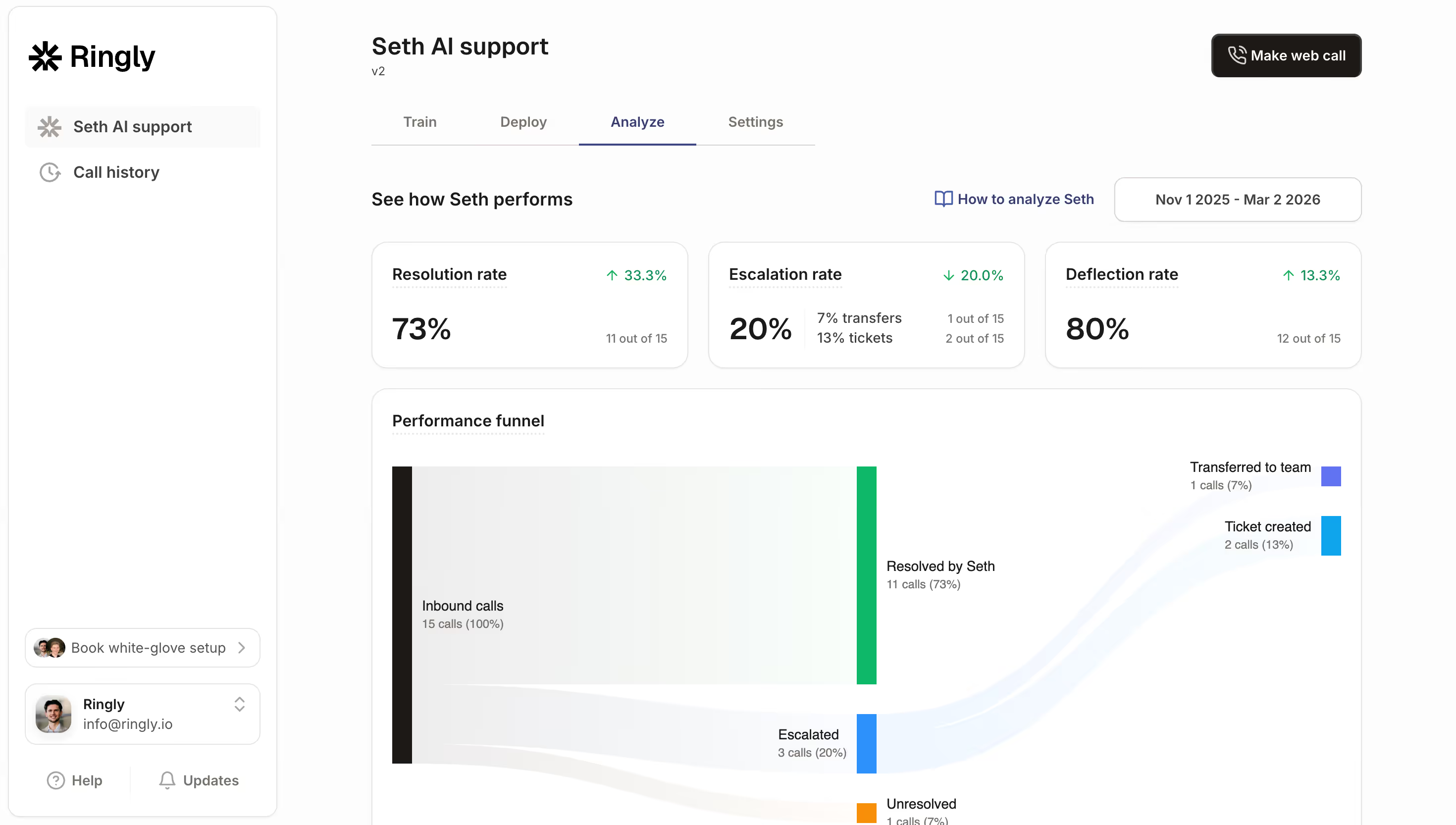
If you run a Shopify store, Ringly.io handles 73% of support calls automatically. That means faster answers for customers with questions about orders, returns, and deliveries, which directly reduces the kind of frustration that leads to chargebacks. Try free for 14 days.
Frequently asked questions
How much does ecommerce fraud cost globally?
Global ecommerce fraud losses reached $48 billion in 2025, according to Juniper Research. That number is projected to climb to $107 billion by 2029. Cumulative losses over the next five years will exceed $362 billion.
What is the biggest type of ecommerce fraud?
Card-not-present (CNP) fraud accounts for 81% of all fraud cases globally and 65% of all credit card fraud losses. First-party fraud (friendly fraud) is the fastest-growing category, now representing 36% of all global fraud cases.
How much do chargebacks cost merchants?
Chargebacks are projected to cost merchants over $100 billion in 2025. Beyond direct losses, US merchants lose $4.61 for every $1 of actual fraud when factoring in fees, labor, and lost merchandise. Chargeback volume is expected to reach 337 million by 2026.
What is friendly fraud?
Friendly fraud (also called first-party misuse) is when a legitimate customer disputes a charge they actually made. This includes claiming a package didn't arrive, disputing after receiving a product, or exploiting refund policies. One in five consumers admit to doing it.
How much do false declines cost retailers?
False declines cost retailers $443 billion globally per year, which is roughly nine times more than actual fraud losses. In the US alone, merchants lose approximately $118 billion annually to legitimate orders that get wrongly blocked. And 39% of those customers never come back.
What is synthetic identity fraud?
Synthetic identity fraud involves creating fake identities using a mix of real and fabricated data. This type of fraud surged 311% between Q1 2024 and Q1 2025, according to Sumsub. Fraudsters use these synthetic identities to open accounts, make purchases, and exploit credit lines.
How are deepfakes affecting ecommerce fraud?
Deepfake fraud has surged 1,100% globally, with US incidents up 700% year over year. Businesses lost an average of $500,000 per deepfake-related incident in 2024. Fraudsters use AI-generated images and video to bypass identity verification during account creation and high-value purchases.
What percentage of ecommerce revenue is lost to fraud?
On average, merchants lose about 3% of total ecommerce revenue to fraud. The rate varies by region: Latin America loses 4.6%, Europe 3.1%, APAC 2.9%, and North America 2.4%. In high-risk verticals, losses can reach 5% or higher.