


Finding the right search solution for your e-commerce store can make or break your conversion rates.
While Luigi's Box has earned its reputation with a 4.9/5 rating across review platforms, it's not the only option worth considering.
Whether you're looking for better pricing, different features, or easier integration, several strong alternatives deserve your attention.
Editor’s note: Want to hear some sample AI support calls made for your Shopify store?
- Just paste your store URL
- Get sample calls in under 20 seconds (no email required)
- Listen to demo calls for my store
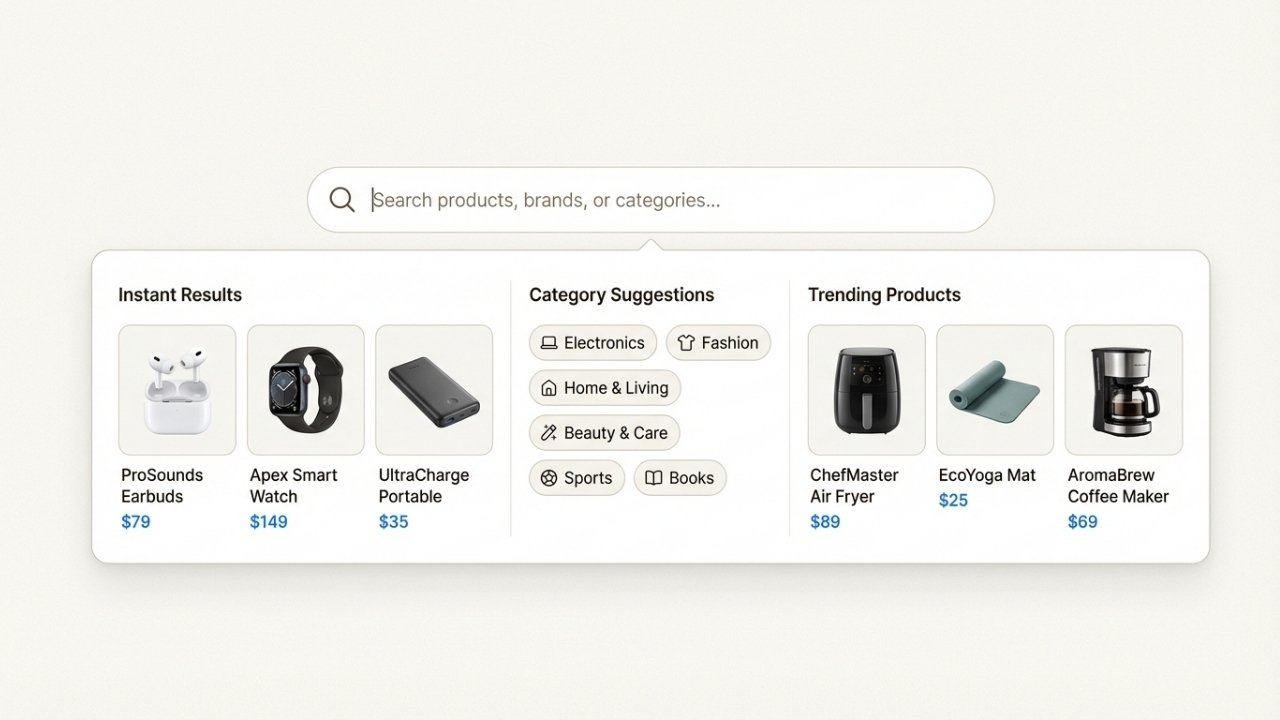
What is Luigi's Box?
Luigi's Box is an e-commerce search and discovery suite designed to improve how customers find products on online stores.
The platform offers five core products: Search with Autocomplete, Recommender, Product Listing, Shopping Assistant, and Analytics.
Together, these tools aim to create a seamless product discovery experience that drives conversions.
The platform scores particularly well in areas like service and support, integration ease, and evaluation processes according to Gartner Peer Insights data.
However, businesses often look for alternatives due to pricing concerns, specific feature requirements, or integration preferences.
Understanding what you're actually comparing against helps frame the decision properly.
How we evaluated these Luigi's Box alternatives
Before diving into specific tools, let's clarify what criteria matter most when choosing a search platform.
We selected these seven alternatives based on several key factors:
- AI capabilities - Modern search needs to understand intent, not just match keywords
- Ease of integration - Implementation complexity varies dramatically between platforms
- Pricing transparency - Some tools hide pricing behind sales calls; others show everything upfront
- E-commerce focus - General search tools and retail-specific solutions serve different needs
It's also worth noting that search is just one piece of the customer experience puzzle.
While you're evaluating these platforms, consider how Ringly.io's AI phone support can complement your search investment by handling the calls that come after customers find what they're looking for.
Comparison at a glance
Here's a quick reference table comparing all seven alternatives side by side:
| Tool | Best For | Starting Price | AI Features | Ease of Setup |
|---|---|---|---|---|
| Algolia | Developers, large catalogs | Free tier, then $0.50/1k searches | NeuralSearch, AI Synonyms, Recommend | Technical (API-first) |
| AddSearch | SMBs, non-technical teams | $119/mo (Core plan) | AI Answers, AI Conversations | Easy (Visual UI) |
| Elasticsearch | Technical teams, enterprises | Free (Self-hosted) | Vector search, ML anomaly detection | Complex |
| Azure AI Search | Microsoft ecosystem | $73.73/mo (Basic tier) | Semantic ranker, Cognitive search | Moderate |
| Coveo | Large enterprises, B2B | Custom (Enterprise) | GenAI agents, ML personalization | Complex |
| FactFinder | E-commerce retailers | Custom | NG Search, AI recommendations | Moderate |
| SearchUnify | Enterprise support teams | Custom (Enterprise) | Agentic AI, Federated RAG | Complex |
The 7 best Luigi's Box alternatives
1. Algolia
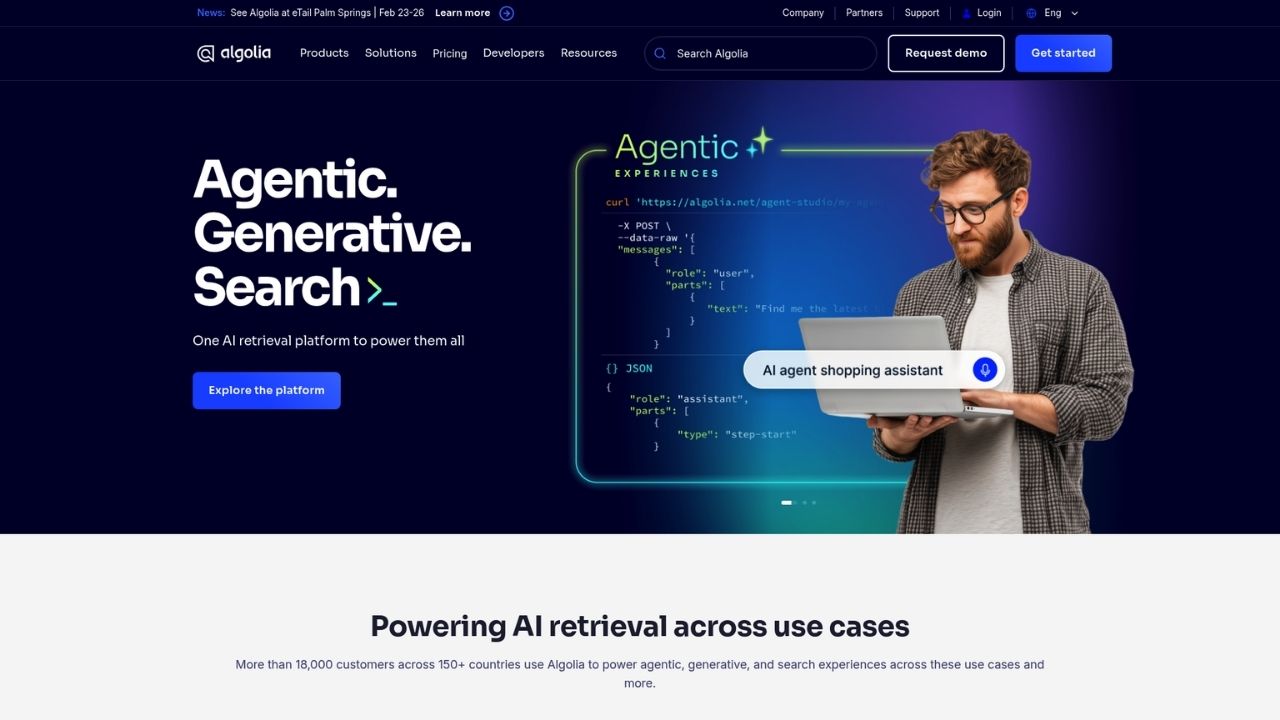
Algolia has become the go-to choice for development teams who need fast, scalable search.
The platform processes billions of queries across 17,000+ customers, including major brands like Stripe, Slack, and Lacoste.
Key features:
- NeuralSearch combines keyword and semantic search
- AI Synonyms automatically suggests relevant terms
- Algolia Recommend powers "frequently bought together" suggestions
- Personalization adapts results to individual users
- A/B Testing for optimizing search configurations
Pros:
- Lightning-fast search performance (under 100ms response times)
- Excellent documentation and developer experience
- Scales to handle massive catalogs
- Strong AI capabilities with NeuralSearch
Cons:
- Requires technical resources to implement properly
- Pricing can escalate quickly with high search volumes
- Complex pricing model makes cost prediction difficult
Pricing: Algolia offers a free "Build" tier with 10,000 search requests and 1 million records monthly.
Paid plans start with "Grow" at pay-as-you-go rates ($0.50 per 1,000 search requests beyond the free tier). "Grow Plus" adds AI features at $1.75 per 1,000 requests. Enterprise "Elevate" plans require annual contracts.
Best for: Development teams, large catalogs, companies prioritizing search speed and relevance
2. AddSearch
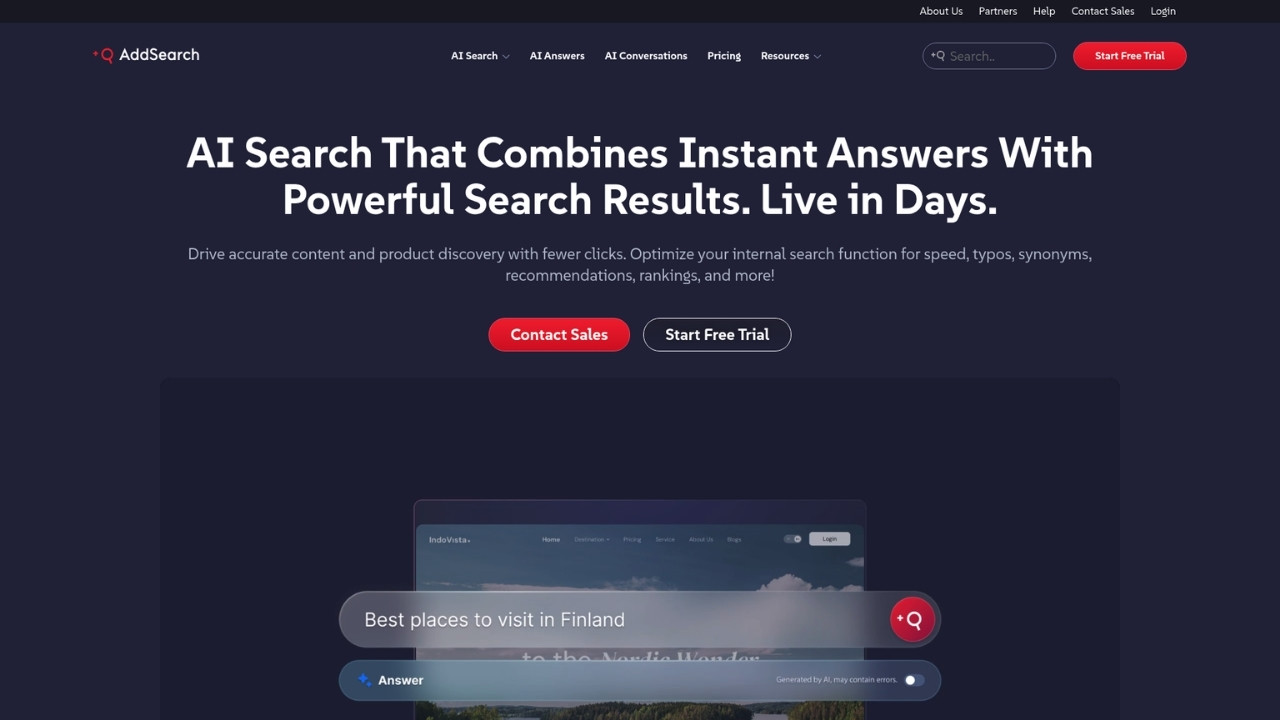
AddSearch takes a different approach, focusing on ease of use rather than developer complexity.
The Finland-based company serves nearly 2,000 customers globally, including media companies, government organizations, and e-commerce stores.
Key features:
- AI Answers provides instant, accurate responses from your content
- AI Conversations enables chat-like interactions
- Autocomplete and smart ranking for better suggestions
- Personalized search based on user behavior
- Content and product recommendations
Pros:
- Works with any CMS without complex integration
- Full setup services included (their team builds your search UI)
- 99.999% SLA available on higher tiers
- 14-day free trial to test everything
Cons:
- AI Answers requires a separate add-on starting at $8,400/year
- Less customizable for highly complex use cases
- Document limits on lower pricing tiers
Pricing: AddSearch offers four tiers: Core ($119/month annual), Growth ($299/month), Advanced ($599/month), and Enterprise (custom).
The Core plan includes 7,500 documents and 75,000 search queries monthly. AI Answers and AI Conversations are priced separately.
Best for: SMBs, content-heavy sites, teams without dedicated developers
3. Elasticsearch
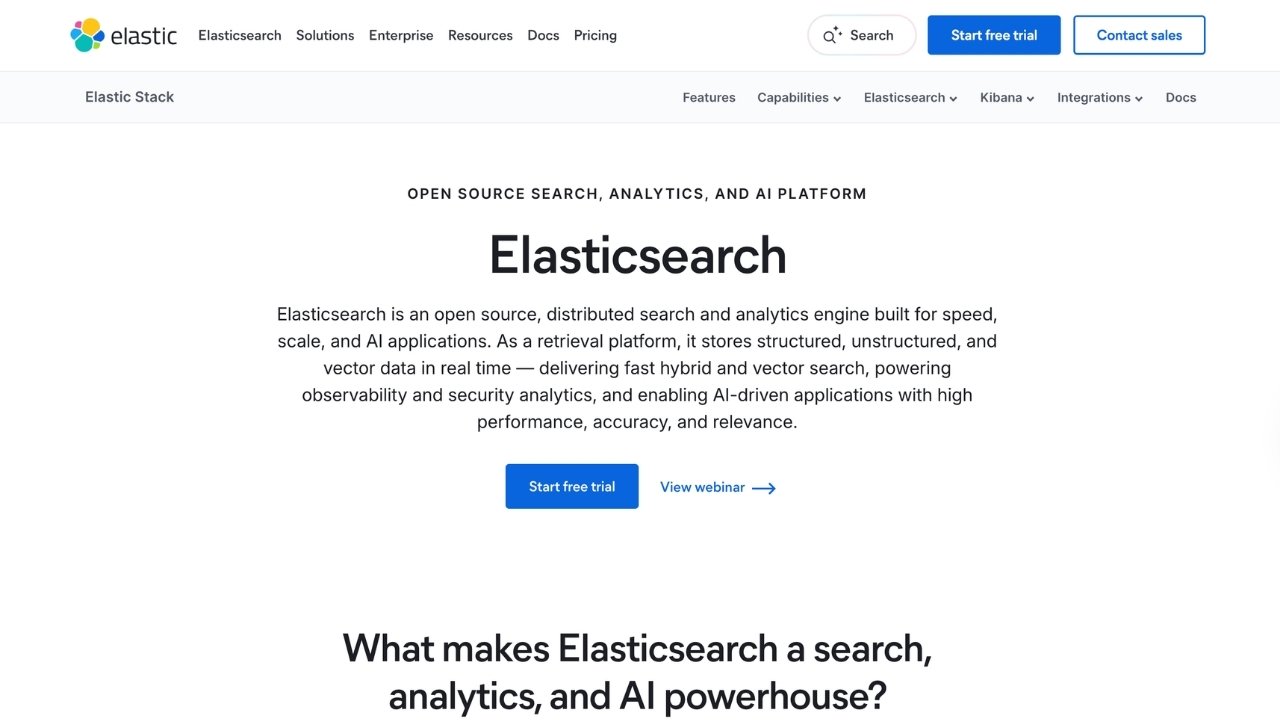
Elasticsearch is the open-source search engine that powers many of the other tools on this list.
If you want maximum control and don't mind managing infrastructure, it's hard to beat.
Key features:
- Full-text search with advanced relevance scoring
- Vector database capabilities for semantic search
- Real-time aggregations and analytics
- Machine learning for anomaly detection
- Elastic Observability for monitoring search performance
Pros:
- Completely free if you self-host
- No vendor lock-in
- Scales to massive datasets (petabytes)
- Huge community and ecosystem
Cons:
- Operational complexity requires dedicated DevOps resources
- Tuning shards, upgrades, and capacity planning need expertise
- Steep learning curve for new users
Pricing: Self-managed Elasticsearch is free and open source. Elastic Cloud hosted options start around $95/month with resource-based pricing.
Serverless options offer usage-based billing.
Best for: Technical teams, enterprises, organizations with complex search requirements
4. Azure AI Search
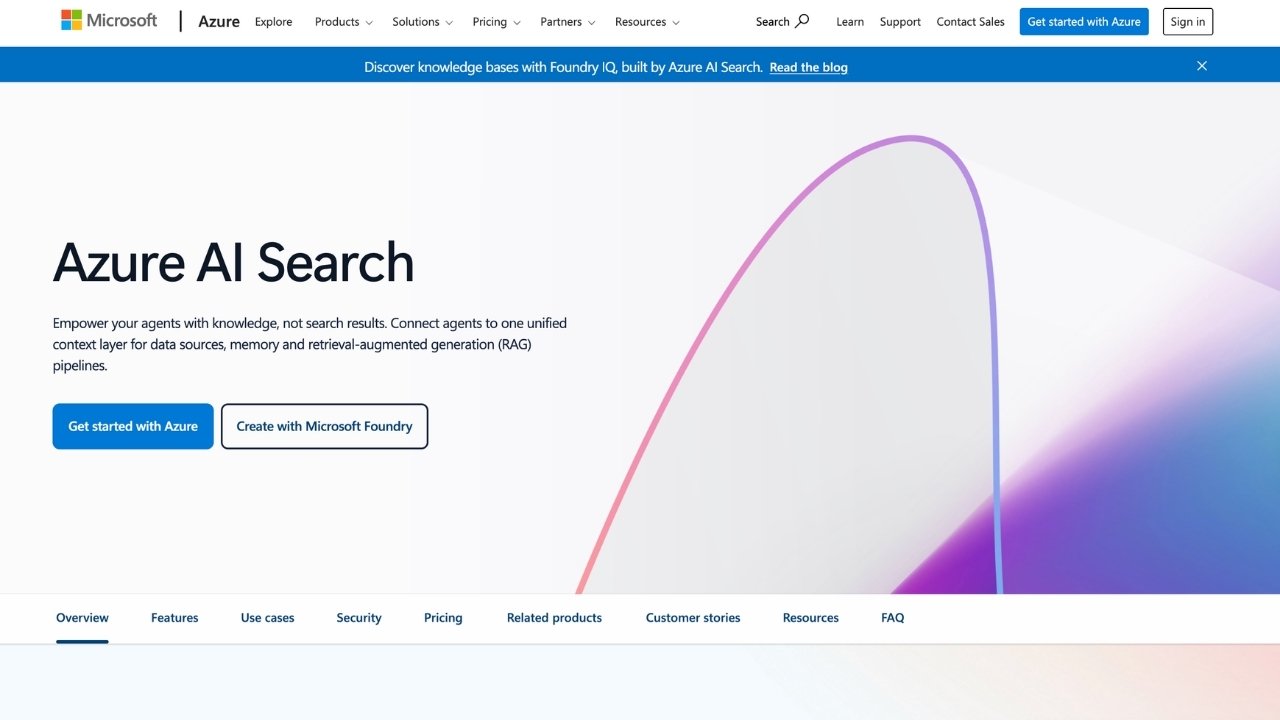
Microsoft's entry into the search market integrates deeply with the Azure ecosystem.
If you're already invested in Microsoft services, this option deserves serious consideration.
Key features:
- Cognitive Search with AI enrichment
- Vector Search for semantic understanding
- Semantic Ranker improves relevance
- Agentic Retrieval for RAG applications
- Hybrid search combining keyword and vector approaches
Pros:
- Enterprise-grade security and compliance
- Integrates seamlessly with Microsoft 365 and Azure services
- Strong AI capabilities through Azure's ecosystem
- 99.9% uptime SLA on paid tiers
Cons:
- Steep learning curve for non-Azure users
- Ecosystem lock-in if you depend on Microsoft services
- Complex pricing structure with multiple components
Pricing: Azure AI Search uses tier-based pricing. The Basic tier starts at $73.73/month per search unit with 15 GB storage.
Standard S1 is $245.28/month with 160 GB. The Semantic Ranker costs $1 per 1,000 requests after the first 1,000 free monthly requests.
Best for: Microsoft shops, enterprises needing compliance, organizations building RAG applications
5. Coveo
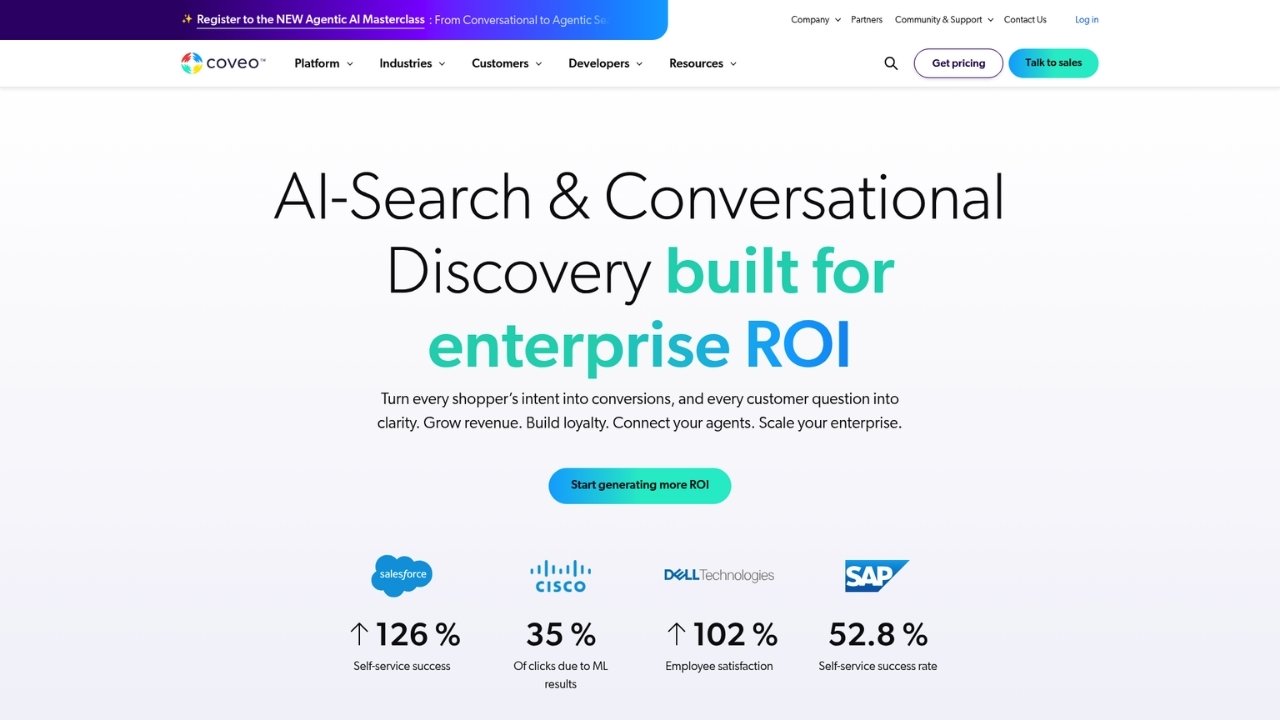
Coveo positions itself as an AI-powered relevance platform rather than just a search tool.
The company focuses heavily on enterprise use cases across e-commerce, service, and workplace search.
Key features:
- Relevance Cloud platform for unified search
- Machine learning ranking that improves automatically
- Personalization across all touchpoints
- Comprehensive analytics and insights
- Product recommendations for e-commerce
Pros:
- Strong enterprise features and security
- Excellent relevance tuning capabilities
- Comprehensive analytics dashboard
- Good for complex B2B commerce scenarios
Cons:
- Enterprise pricing (not transparent, contact sales)
- Complex implementation process
- May be overkill for smaller organizations
Pricing: Coveo does not publish pricing publicly. Enterprise contracts are customized based on search volume, index size, and feature requirements. Expect significant investment compared to self-serve options.
Best for: Large enterprises, B2B commerce, service organizations with complex knowledge needs
6. FactFinder

FactFinder (formerly FACT-Finder) is a German company laser-focused on e-commerce conversion optimization.
Their NG platform emphasizes merchandising tools alongside search functionality.
Key features:
- NG Search with AI-powered relevance
- Product navigation with faceted filtering
- "Frequently bought together" recommendations
- Personalization based on user behavior
- Merchandising campaigns for business users
Pros:
- E-commerce specialized (not a generic search tool)
- Strong conversion optimization features
- Good merchandising tools for non-technical teams
- Established European presence
Cons:
- Pricing not transparent (custom quotes)
- Primarily focused on retail use cases
- Less flexible for non-commerce applications
Pricing: FactFinder uses custom pricing based on catalog size and search volume. Contact their sales team for quotes.
Best for: Mid to large e-commerce retailers, companies prioritizing conversion optimization
7. SearchUnify
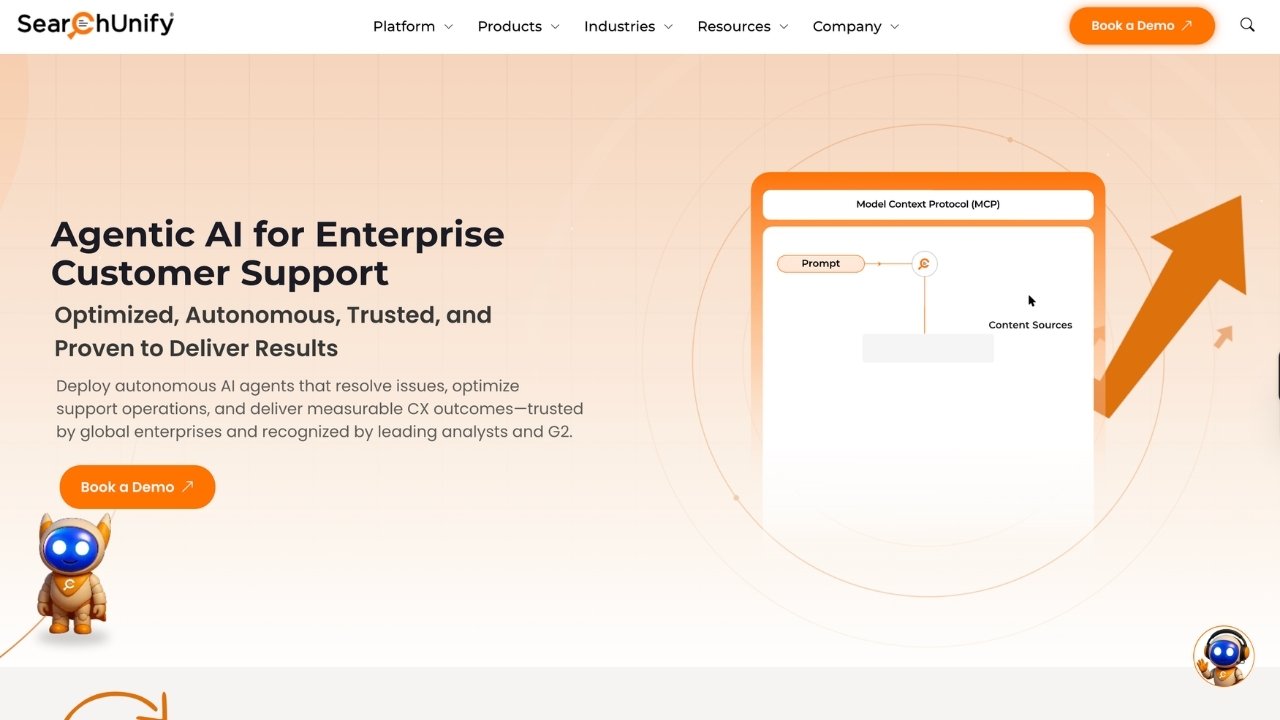
SearchUnify takes a different approach, positioning itself as an enterprise agentic AI platform rather than just search.
The platform includes multiple AI agents for different support functions.
Key features:
- Cognitive Search across enterprise content
- AI Support Agent for autonomous resolution
- AI Agent Partner for agent assistance
- AI Knowledge Agent for content creation
- SearchUnifyFRAG for federated retrieval
Pros:
- Advanced agentic AI capabilities
- Multiple specialized AI agents for different tasks
- Strong enterprise focus with security certifications
- Good for complex support environments
Cons:
- Enterprise-only pricing (not for SMBs)
- Complex implementation
- Higher cost than simpler alternatives
Pricing: SearchUnify offers custom enterprise pricing. The platform targets large organizations with complex support needs.
Best for: Large enterprises, complex support environments, organizations wanting agentic AI capabilities
Which Luigi's Box alternative should you choose?
Picking the right search platform depends on your specific situation. Here's a simple framework to help you decide:
Choose Algolia if: You have development resources and need fast, scalable search with strong AI capabilities. It's the industry standard for a reason, but you'll need technical talent to get the most from it.
Choose AddSearch if: You want powerful search without hiring developers. Their team will even build your search UI for you on higher tiers. The AI Answers add-on is pricey, but the core search works well.
Choose Elasticsearch if: You have DevOps expertise and want maximum control. The free self-hosted option is unbeatable for cost-conscious technical teams.
Choose Azure AI Search if: You're already invested in Microsoft services. The integration benefits outweigh the learning curve for Azure shops.
Choose Coveo if: You're a large enterprise with complex requirements and budget isn't the primary constraint. The relevance tuning is excellent.
Choose FactFinder if: You're a mid-to-large retailer focused specifically on conversion optimization. The merchandising tools are strong.
Choose SearchUnify if: You need agentic AI capabilities across your support organization, not just search. The multiple AI agents offer comprehensive automation.
While you're upgrading your search experience, don't forget about the other side of customer interactions.
Ringly.io's AI phone agent the AI handles inbound calls 24/7, answering questions about orders, processing returns, and escalating only when necessary. It integrates seamlessly with Shopify and can resolve up to 73% of calls without human intervention.
Getting started with better e-commerce search
The right search solution can dramatically improve your conversion rates and customer satisfaction.
Each of these seven alternatives offers something different, so the "best" choice depends entirely on your specific needs, budget, and technical resources.
Before committing to any platform, take advantage of free trials where available. Algolia's Build plan, AddSearch's 14-day trial, and Elasticsearch's open-source option let you test without financial commitment. For enterprise tools like Coveo and SearchUnify, request detailed demos that match your use case.
Remember that search is just one touchpoint in the customer journey. While you're improving product discovery, consider how Ringly.io's AI phone support can handle the calls that come after customers find what they need. the AI answers questions, looks up orders, and processes returns automatically, letting your team focus on complex issues that actually need human attention.
Frequently Asked Questions
What are the best free Luigi's Box alternatives?
Algolia offers a generous free tier with 10,000 monthly search requests and 1 million records. Elasticsearch is completely free if you self-host. Azure AI Search has a free tier with 50 MB storage for testing.
Which Luigi's Box alternative is easiest to set up?
AddSearch is the easiest for non-technical teams. They offer full setup services where their team builds your search UI. Algolia is developer-friendly but requires technical implementation.
Are there any open-source Luigi's Box alternatives?
Elasticsearch is the leading open-source search engine. It's completely free to self-host and powers many commercial search solutions. The trade-off is that you manage your own infrastructure.
Which Luigi's Box alternative has the best AI features?
Algolia's NeuralSearch and AI Synonyms are industry-leading. SearchUnify offers the most advanced agentic AI with multiple specialized AI agents. AddSearch provides AI Answers and Conversations as add-ons.
How much do Luigi's Box alternatives typically cost?
Pricing varies widely. Self-serve options like AddSearch start at $119/month. Usage-based tools like Algolia charge based on search volume. Enterprise platforms like Coveo and SearchUnify require custom quotes and typically start in the thousands per month.
Can I use these Luigi's Box alternatives with Shopify?
Yes, most alternatives offer Shopify integrations. Algolia has a dedicated Shopify app. AddSearch works with any CMS including Shopify. Elasticsearch and Azure AI Search can integrate via APIs.
Do I need technical skills to implement these Luigi's Box alternatives?
It depends on the tool. AddSearch requires no coding. Algolia and Azure AI Search need developer resources. Elasticsearch requires DevOps expertise. Coveo and SearchUnify typically involve professional services for implementation.