

Amazon Lex has been the go-to choice for AWS-native teams building conversational AI.
But the developer-heavy setup, robotic voice interactions, and AWS ecosystem lock-in leave many businesses searching for something better.
If you're looking for Amazon Lex alternatives that actually sound human, deploy faster, and won't require a team of engineers to maintain, this guide's for you.
We've researched and compared 7 top conversational AI platforms, from e-commerce specialists like Ringly.io to enterprise giants like Google Dialogflow.
Editor’s note: Want to hear some sample AI support calls made for your Shopify store?
- Just paste your store URL
- Get sample calls in under 20 seconds (no email required)
- Listen to demo calls for my store
What is Amazon Lex?
Amazon Lex is AWS's fully managed service for building conversational interfaces using voice and text. It uses the same deep learning technology that powers Alexa, offering automatic speech recognition (ASR) and natural language understanding (NLU) capabilities.
Lex excels at basic chatbot functionality and integrates seamlessly with other AWS services like Lambda, DynamoDB, and Amazon Connect. For teams already deep in the AWS ecosystem, it offers a familiar path to automation.
But Lex has limitations that drive users to alternatives:
- Developer-centric setup requires significant coding for even basic implementations
- Robotic voice quality with noticeable pauses between conversation turns
- Limited pre-built workflows mean building everything from scratch
- AWS lock-in makes integration with non-AWS systems complex
- No auto-learning requires manual updates for improvements
How we evaluated these Amazon Lex alternatives
To create a fair comparison, we looked at several key criteria:
- Voice quality and naturalness does it sound human or robotic?
- Ease of deployment how quickly can you go live?
- Integration capabilities what systems does it connect to?
- Pricing transparency are costs predictable?
- E-commerce fit does it handle phone support use cases well?
Here's how the top alternatives stack up:
| Platform | Best For | Voice Quality | Setup Complexity | Pricing Model | Key Strength |
|---|---|---|---|---|---|
| Ringly.io | E-commerce phone support | Natural | Very Easy | Flat monthly | Shopify integration |
| Google Dialogflow | Multi-language support | Good | Moderate | Pay-per-request | Visual builder |
| Voiceflow | No-code development | Good | Very Easy | Usage-based | Visual design |
| Kore.ai | Enterprise contact centers | Very Good | Complex | Contact sales | Pre-built intents |
| Vapi AI | Real-time voice apps | Excellent | Technical | Usage-based | Low latency |
| Replicant | Large-scale automation | Excellent | Moderate | Contact sales | Fast deployment |
| Rasa | Data sovereignty | Good | Complex | Free/Enterprise | Full control |
1. Ringly.io

Ringly.io's an AI phone support platform built specifically for e-commerce businesses using Shopify. Its core product, the AI, acts as a 24/7 AI phone agent that handles inbound calls, looks up orders, processes returns, and escalates complex issues to human agents only when necessary.
Key features:
- the AI AI agent with 73% call resolution rate without human intervention
- Deep Shopify integration for order tracking and returns
- 40-language support for global customer bases
- quick setup with no coding required
- Call recordings, transcripts, and analytics
Pros:
- Purpose-built for e-commerce phone support
- Natural voice conversations that don't sound robotic
- Transparent, predictable pricing
- Fast time-to-value with minimal technical expertise
Cons:
- E-commerce focused (not ideal for general use cases)
- Best suited for Shopify stores
- Smaller ecosystem than enterprise platforms
Pricing:
| Plan | Monthly Price | Minutes Included | Key Features |
|---|---|---|---|
| Grow | $349 | 1,000 | Self-learning AI, store data integration |
| Enterprise | Custom | 5,000+ | Private Slack channel, custom integrations |
Overage minutes cost $0.19 per minute. A 14-day free trial is available with full features.
Source: Ringly.io pricing
2. Google Dialogflow
Google Dialogflow, now branded as Customer Experience Agent Studio, is a next-generation conversational AI platform powered by Gemini. It offers a visual builder for creating sophisticated AI agents without extensive coding.
Key features:
- Visual state machine for complex conversation flows
- 40+ languages with human-like voices
- 35 pre-built agent templates
- Multimodal support (text, audio, images)
- Audio-to-audio translation in 10 core languages
- Omnichannel deployment across web, mobile, voice, and social
Pros:
- Easier learning curve than Amazon Lex
- Strong Google Cloud ecosystem integration
- Generous free tier for testing
- Visual builder makes complex flows manageable
Cons:
- Google Cloud lock-in for advanced features
- Pay-per-request pricing can escalate quickly
- Voice quality, while good, still has that "AI feel"
Pricing:
| Agent Type | Flows (Deterministic) | Playbooks (Generative) |
|---|---|---|
| Chat | $0.007 per request | $0.012 per request |
| Voice | $0.001 per second | $0.002 per second |
Free trial includes $600 credit for Flows and $1,000 for Playbooks, valid for 12 months.
Source: Dialogflow pricing
3. Voiceflow

Voiceflow's a no-code platform for building AI agents across voice and chat channels. Recently named in Gartner's Innovation Guide for AI Agents, it's designed for teams that want sophisticated conversational AI without the technical overhead.
Key features:
- Visual drag-and-drop conversation builder
- AI-powered agent design with natural language instructions
- Multi-platform deployment (voice, chat, web)
- Model flexibility choose from major LLM providers or bring your own
- Real-time collaboration with team roles and permissions
- Environment management (dev, staging, production)
Pros:
- No coding required for most use cases
- Fast iteration and deployment cycles
- Avoids model lock-in with multiple provider options
- Strong focus on design and user experience
Cons:
- Less powerful for complex enterprise requirements
- Limited advanced NLU customization
- Pricing can be opaque for high-volume use cases
Pricing:
Voiceflow offers a free trial with no credit card required. Paid plans include usage-based options for agencies and businesses, plus enterprise contracts with implementation support. Specific pricing requires contacting sales for higher tiers.
Source: Voiceflow pricing
4. Kore.ai
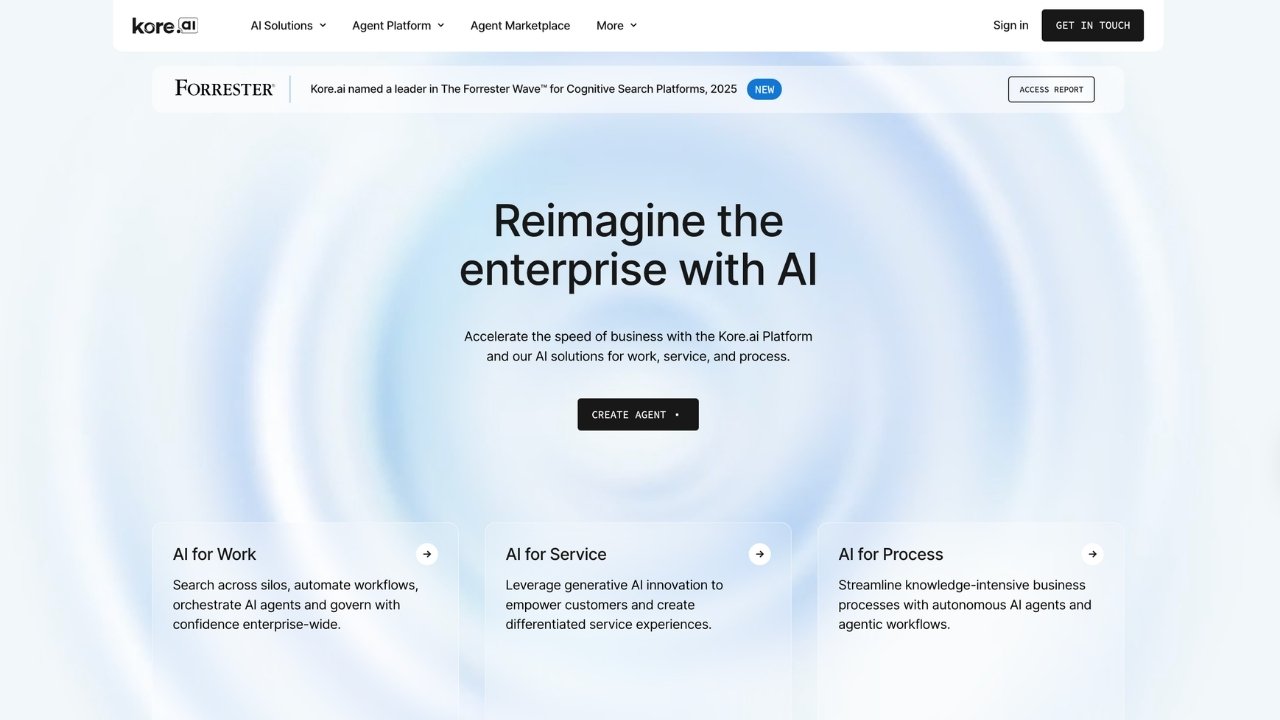
Kore.ai's an enterprise-grade conversational AI platform named a Leader in Gartner's 2025 Magic Quadrant for Conversational AI Platforms. It offers pre-built applications for specific industries alongside a comprehensive development platform.
Key features:
- XO Platform for enterprise-scale agent deployment
- Pre-built applications for banking, healthcare, retail, HR, and IT
- Application accelerators and marketplace
- Agentic AI capabilities for autonomous task completion
- Advanced analytics and business intelligence
Pros:
- Rich pre-trained models for common industry use cases
- Strong enterprise security and compliance features
- Comprehensive platform covering full agent lifecycle
- Gartner-recognized leadership position
Cons:
- Enterprise pricing (expensive for smaller teams)
- Complex implementation process
- Longer time to value compared to simpler alternatives
Pricing:
Kore.ai uses an enterprise-focused pricing model. No public pricing is available; interested companies must contact sales for a custom quote.
Source: Kore.ai
5. Vapi AI
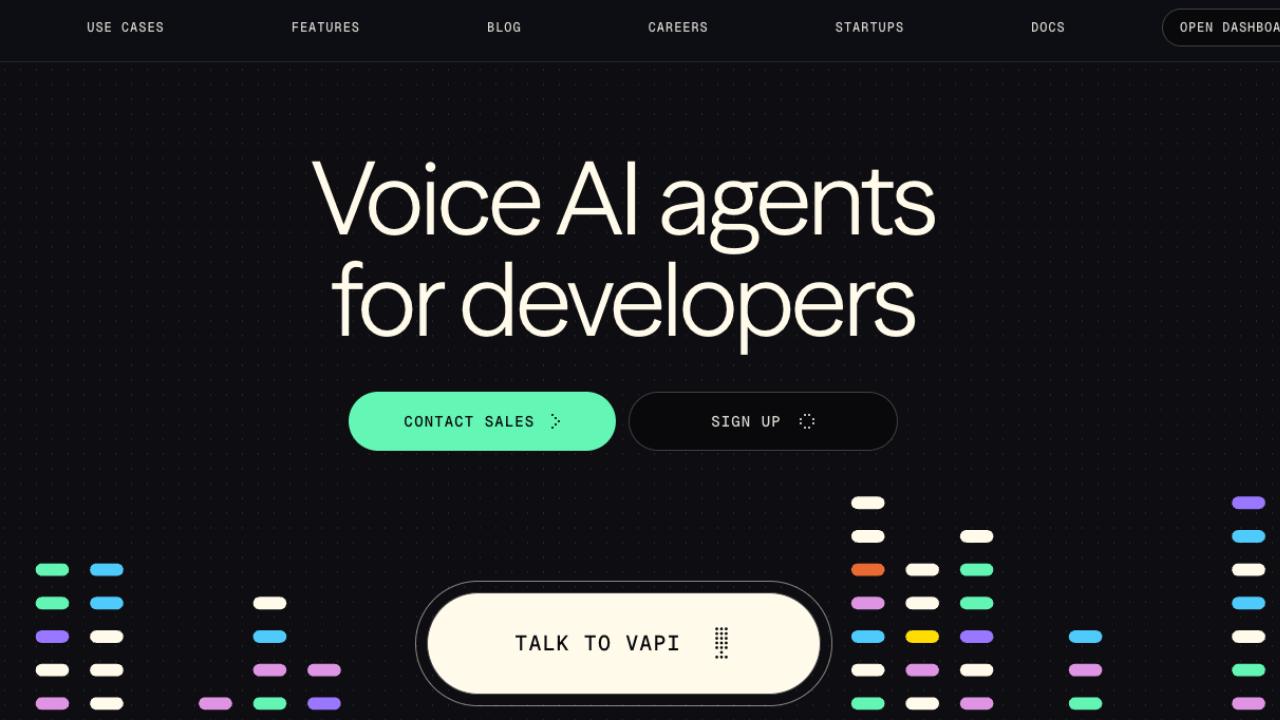
Vapi's a developer-focused voice AI platform designed for building real-time conversational applications. With over 300 million calls processed, it's proven at scale for companies ranging from startups to Fortune 500 enterprises.
Key features:
- Sub-500ms latency for natural conversations
- 100+ supported languages
- Bring your own model provider (OpenAI, Anthropic, etc.)
- Tool calling for API integrations
- A/B testing for conversation optimization
- Automated testing to identify hallucination risks
- 99.99% uptime SLA
Pros:
- Extremely fast response times feel natural
- Developer-friendly API-first approach
- Flexible voice and model customization
- Proven at massive scale
Cons:
- Requires technical expertise to implement
- Developer-centric (not no-code friendly)
- Smaller ecosystem than major cloud providers
Pricing:
| Feature | Pay As You Go | Enterprise |
|---|---|---|
| Vapi Hosting (Calls) | $0.05/min | Volume based |
| Call Concurrency | 10 included + $10/line/mo | Custom |
| Model Providers | At cost | Included |
| Support | Community Discord, Email | Private Slack |
Free trial includes $10 credit to start.
Source: Vapi pricing
6. Replicant
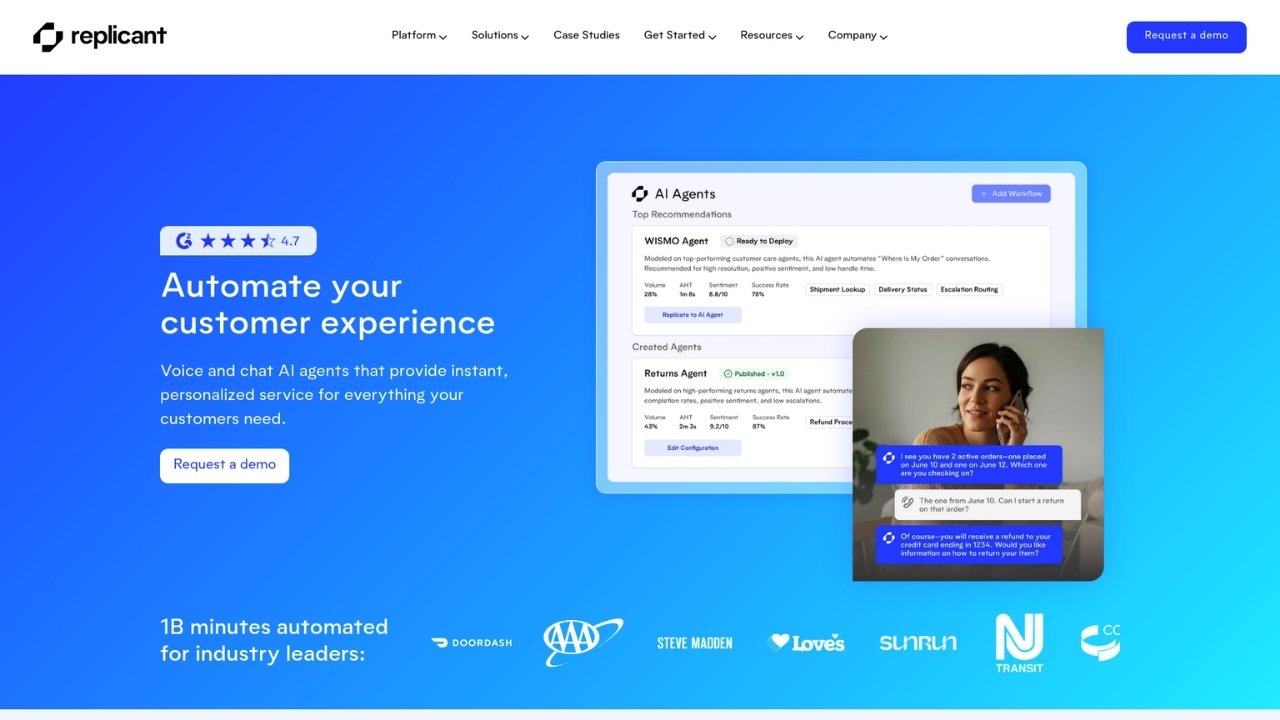
Replicant specializes in contact center automation, using AI trained on over 1 billion minutes of conversations to replicate your best human agents. It's designed for large-scale deployments that need to go live fast.
Key features:
- Voice and chat AI across multiple channels
- Conversation intelligence and analytics
- Replicare partnership for unlimited support and optimization
- 99.99% uptime with battle-tested infrastructure
- Pre-built contact center workflows
Customer results:
- DoorDash: Live in 4 weeks
- ECSI: 90% AI agent CSAT score
- Sunrun: 50% call resolution rate
- Fanatics: 200+ AI agents deployed
Pros:
- Purpose-built for contact center use cases
- Faster deployment than building from scratch
- Continuous auto-optimization included
- Human-like conversation quality
Cons:
- Enterprise pricing structure
- Overkill for small teams or simple use cases
- Less flexible for non-standard implementations
Pricing:
Replicant uses usage-based pricing with enterprise contracts. Specific pricing requires contacting sales for a demo and custom quote.
Source: Replicant
7. Rasa
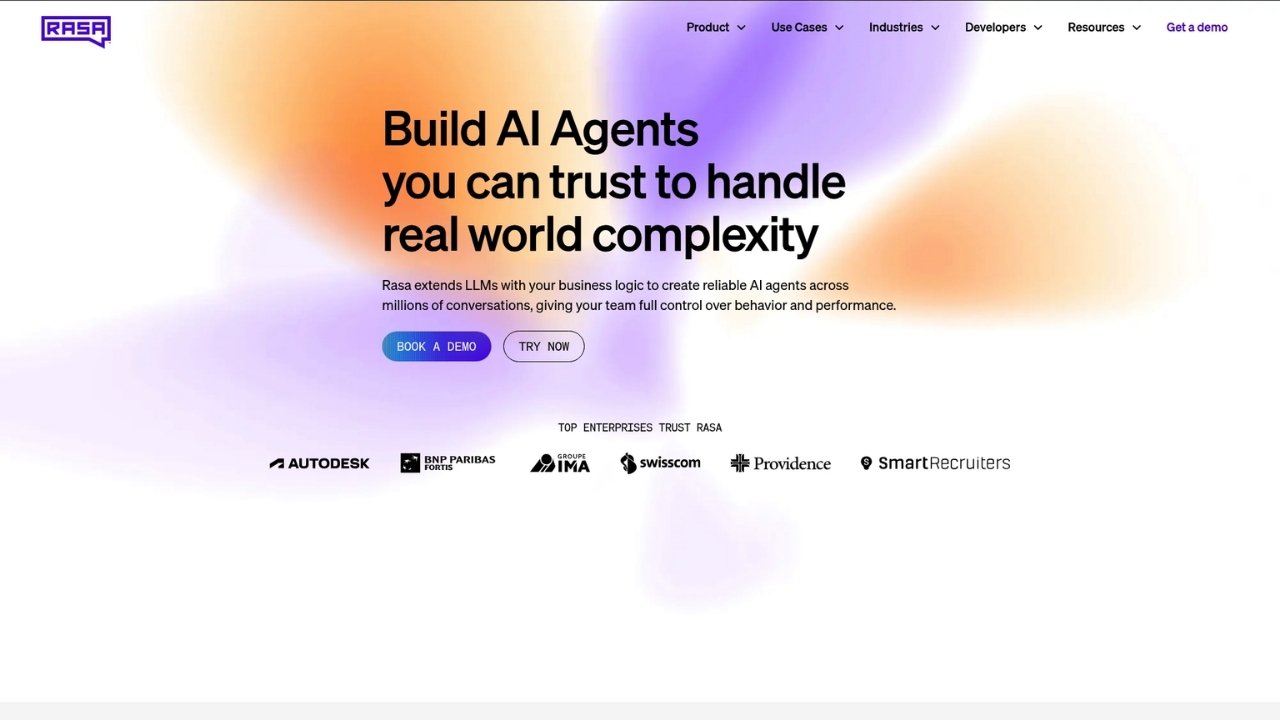
Rasa's an open-source conversational AI platform that gives organizations complete control over their AI agents. It's the choice for companies that need data sovereignty or have strict compliance requirements.
Key features:
- Open-source framework with no vendor lock-in
- Full on-premise deployment option
- CALM (Conversational AI with Language Models) architecture
- Rasa Pro for developers, Rasa Studio for business users
- Voice gateway with IVR support
- Kubernetes deployment via Helm charts
- Enterprise search and PII management
Pros:
- 100% data ownership and control
- No vendor lock-in
- Highly customizable for specific needs
- Free open-source version available
Cons:
- Requires significant technical expertise
- Self-managed infrastructure responsibility
- Longer time to value compared to managed solutions
Pricing:
| Plan | Price | Features |
|---|---|---|
| Developer Edition | Free | 1 bot, 1,000 external conversations/month, community support |
| Enterprise | Contact sales | Full platform, premium support, large-scale deployment |
Source: Rasa pricing
Which Amazon Lex alternative should you choose?
The right choice depends on your specific situation:
Choose Ringly.io if: You run a Shopify store and need purpose-built e-commerce phone support that deploys in minutes, not weeks.
Choose Google Dialogflow if: You're already using Google Cloud services and need strong multi-language support with a visual builder.
Choose Voiceflow if: You want a no-code solution that lets non-technical team members build and maintain AI agents.
Choose Kore.ai if: You're a large enterprise needing industry-specific pre-built solutions and Gartner-recognized platform reliability.
Choose Vapi AI if: You have developer resources and need ultra-low latency voice applications with maximum flexibility.
Choose Replicant if: You run a large contact center and need proven enterprise automation with fast deployment timelines.
Choose Rasa if: Data sovereignty is non-negotiable, or you need full control over your AI infrastructure.
Getting started with AI phone support
Amazon Lex isn't your only option, and for many businesses, it's not the best option. The alternatives above offer faster deployment, better voice quality, and more predictable pricing.
For e-commerce businesses specifically, specialized solutions often outperform generalist platforms. If you're running a Shopify store and want to see what AI phone support can do for your customer experience, start a free trial and watch the AI in action.
Frequently Asked Questions
What are the main limitations that drive people to look for Amazon Lex alternatives?
The most common complaints are the developer-heavy setup requiring significant coding, robotic voice interactions with noticeable pauses, AWS ecosystem lock-in, lack of pre-built workflows, and no auto-learning capabilities requiring manual updates.
How does pricing compare between Amazon Lex and its alternatives?
Amazon Lex uses pay-per-request pricing ($0.004 per speech request, $0.00075 per text request). Alternatives range from flat monthly rates (Ringly.io starting at $349/month) to usage-based models (Vapi at $0.05/minute) and enterprise contracts (Kore.ai, Replicant). The best value depends on your call volume and technical resources.
Which Amazon Lex alternative is best for small businesses without developers?
Ringly.io and Voiceflow are the most accessible options. Ringly.io offers quick setup specifically for e-commerce, while Voiceflow provides a visual no-code builder for general use cases. Both require minimal technical expertise.
Can these Amazon Lex alternatives integrate with non-AWS systems?
Yes, most alternatives offer broader integration options than Lex. Google Dialogflow integrates with Google Cloud services, Voiceflow connects to major CRMs and helpdesks, Vapi offers 40+ integrations including Salesforce and Zendesk, and Rasa provides complete flexibility for custom integrations.
How do voice quality and naturalness compare across these Amazon Lex alternatives?
Voice quality varies significantly. Vapi AI and Replicant offer the most natural conversations with sub-500ms latency. Ringly.io provides natural voice specifically tuned for e-commerce. Google Dialogflow and Voiceflow offer good quality but can still feel somewhat AI-like. Rasa's quality depends on your chosen voice provider.
What should you consider when choosing between these Amazon Lex alternatives for phone support?
Consider your technical team capacity, integration requirements with existing systems, budget constraints, timeline for deployment, and whether you need industry-specific features. E-commerce businesses should prioritize Shopify integration, while enterprises may need the scale and compliance features of Kore.ai or Replicant.